
Vashisht Hot Springs & Jogini Falls: A Half-Day We Send Almost Every Guest On
Of all the day trips guests ask us to plan, this is the one we recommend the most freely — because it is genuinely good, it is inexpensive, and it doesn't eat a whole day. Vashisht is a small stone-and-slate village on the east bank of the Beas, sitting about 2 km uphill from the Manali bus stand at roughly 1,980 m. It has two things worth crossing a river for: natural sulphur hot springs that have been running for centuries, and a short waterfall walk to Jogini Falls that most reasonably fit people can do without any real trekking experience. Put the two together with a coffee in Old Manali afterwards and you have a relaxed, satisfying half-day.
From our Shanag house near Bahang, Vashisht is about 6–7 km and 20–25 minutes by car; you cross back towards Manali and then up. From the 14 Mile / Badgran house on the highway south of town, it's roughly 16–17 km — allow 40–50 minutes, more if you hit the Manali market crawl in peak season. We'll say this once, plainly: the last stretch up to Vashisht is a narrow one-lane village road that clogs badly on weekends and through May–June and the December–January holiday rush. If you can go on a weekday morning, do.
The hot springs and the temple
The springs are the heart of old Vashisht, right beside the Vashisht temple, which is dedicated to the sage Vashishtha, and the adjacent Ram temple. The water surfaces naturally hot — genuinely hot, not lukewarm — and is piped into stone bathing tanks. There are separate bathing enclosures for men and women. Entry to the temple and the public bathing tanks is free; there is no ticket. That is one of the reasons we like sending people here rather than to a paid spa: the tradition is that the springs are open to everyone.
A few honest notes before you picture a serene Nordic thermal pool. This is a living village temple complex, not a resort. The public tanks are communal and can be crowded and a bit rough around the edges, especially in high season. The water genuinely smells of sulphur — that faint rotten-egg note is normal and, some say, the whole point for the skin. If you'd rather soak in privacy, several guesthouses and small hotels in Vashisht have their own sulphur-fed private baths and will let non-guests use them for a modest fee; ask at the top of the village. Bring your own towel and a change of clothes either way, and keep valuables with someone or leave them in the car.
- Timings: the temple and public bathing tanks are generally open from early morning, around 5–6 am, until roughly 8–9 pm. Go early — before 9 am — for the calmest experience.
- Cost: temple and public tanks free; private sulphur baths at guesthouses typically a small per-person fee (ask locally, it's modest).
- Dress: modest clothing inside the temple; you'll want a towel, slippers and dry clothes for the springs.
- Photography is fine around the temple courtyard, but be respectful around the bathing areas — people are actually bathing.
The lanes above the springs are worth ten unhurried minutes. Vashisht kept a lot of its old Himachali wood-and-stone architecture, and there are little cafés, German-bakery-style spots and Israeli-food joints that grew up around the backpacker trail here decades ago. It's a good place for a chai and a slice of apple crumble before you start walking.
The walk to Jogini Falls
Jogini Falls is the reason to linger in Vashisht rather than just dip and leave. The trail starts from the upper edge of Vashisht village — you walk past the temple, keep climbing through the lanes, and follow the path that heads up and to the right along the hillside. It's well-trodden and generally easy to follow; if in doubt, ask anyone for 'Jogini' and they'll point you on. Locals consider Jogini a sacred spot, and there's a small shrine near the base of the falls.
The distance is short — very roughly 2.5–3 km each way from Vashisht — but it is uphill on the way there, so budget honestly. Most people take about 45 minutes to an hour to walk up at a gentle pace, and a bit less coming down. The path runs through apple orchards and pine, past a few small dhabas and a couple of houses, with the Beas valley opening up behind you. About halfway you'll usually catch the sound of the water before you see it.
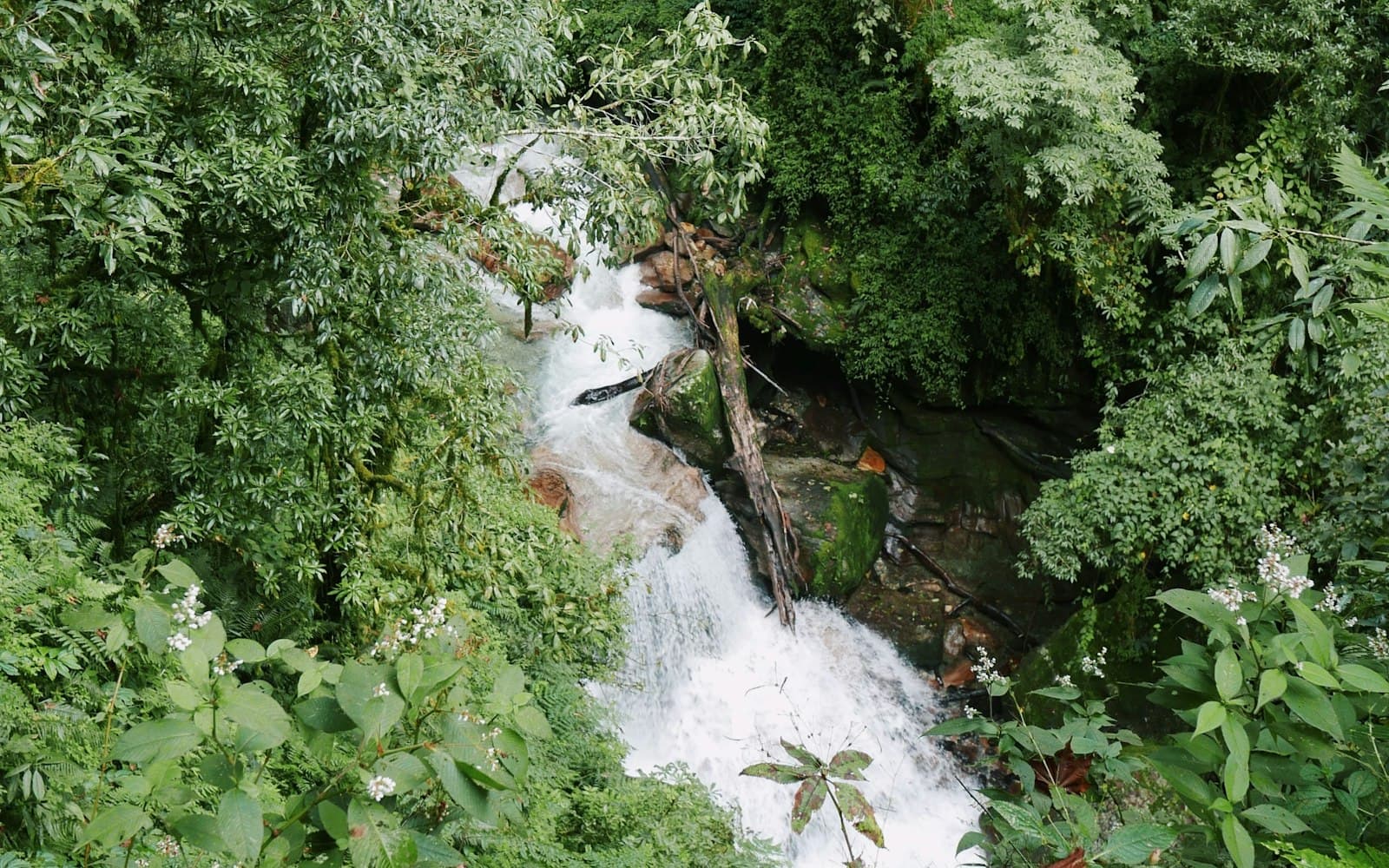
The falls themselves come in two parts: a lower cascade where the trail first meets the stream, and a taller upper drop you reach by climbing a bit further over rocks. The main fall is a proper multi-tier plunge — full and thundering in the melt season, quieter but still lovely in autumn. The pool and rocks at the base are the classic spot to sit with your feet in glacier-cold water and eat whatever you carried up. There are usually one or two seasonal tea stalls near the top in summer selling Maggi, chai and cold drinks; don't count on them off-season.
“We tell guests: do the Jogini walk first, while your legs are fresh and the morning is cool, then come back down and soak in the hot springs to undo the climb. Reversing that order — springs, then a hot uphill slog — is a mistake we've watched people regret.”— Your hosts at Persimmon
Is it hard? Who should skip it?
For an averagely fit adult in decent shoes, no — it's a moderate uphill walk, not a mountaineering feat, and children who are used to walking manage it well. That said, be honest with yourself. The last section up to the upper fall involves scrambling over wet, uneven rock, which is slippery, and there are exposed edges near the water. We wouldn't take a toddler up the final rock section, and anyone with knee trouble or a fear of heights can happily stop at the lower cascade, which is still a fine view. The altitude here is modest, but if you've just arrived in Manali from the plains, you may find you're breathing harder than you expect on the climb — take it slow and hydrate.
- Wear proper shoes with grip. Every season we hear about someone who tried it in flip-flops or fashion sneakers and had a bad slip on the wet rock near the top.
- Carry water and a snack. There's food seasonally but not reliably, and definitely not in the shoulder months.
- Start by 9–10 am in summer so you're walking before the afternoon heat and before the crowds thicken.
- The mountain water is genuinely cold and the current is stronger than it looks in melt season — paddle at the edges, don't try to swim under the main fall.
- Carry your rubbish back down. It's a sacred site and a beautiful one; the tea-stall plastic problem is real and we'd all rather it didn't get worse.
When to go — season by season
The character of both the springs and the falls changes a lot across the year, and it's worth matching your visit to what you actually want.
April to June is peak flow for Jogini as the snow melts, so the falls are at their most dramatic. Daytime temperatures in Vashisht sit comfortably around 20–28°C in this window — pleasant walking weather, though this is also the busiest tourist season and the village road and springs will be crowded. July to mid-September is the monsoon. The valley is at its greenest and the fall is full, but the trail gets muddy and properly slippery, and the wet rock near the upper fall is genuinely risky after rain. We're cautious about sending families up in a downpour, and there's a real, if occasional, risk of landslips on Himachal hill roads during heavy spells — check the day's weather with us before you set off.
Late September through November is, in our biased opinion, the sweet spot. The monsoon has cleared, the air is sharp and clear with big mountain views, daytime temperatures are a crisp 12–20°C, and the crowds have thinned. The waterfall is gentler than in June but the walk is at its most beautiful, with the orchards turning. December to February is winter: cold, often 0–8°C by day and below freezing at night, and there can be snow on the Jogini trail that makes the upper section unsafe without care. The hot springs, on the other hand, are magical in the cold — sitting in naturally hot sulphur water while it's near-freezing outside is exactly the kind of thing winter guests remember. One local heads-up from us: the orchard road and the hill lanes around here ice over from around mid-December, so give any winter drive up to Vashisht extra time and don't be shy about parking lower and walking the last bit.
Combining it with Old Manali
Vashisht and Old Manali sit on opposite banks of the Beas, roughly across from each other, and together they make the natural full half-day. Old Manali is about 3 km from Vashisht by road — you drop back towards the main Manali junction and cross the river — so 10–15 minutes' drive, or a short shared-cab hop. Old Manali is the café-and-lanes side of the valley: riverside cafés, bakeries, live-music spots in season, the Manu Temple at the top of the village, and a walkable stretch of shops. It's the obvious lunch-and-coffee stop after your morning of walking and soaking.
Our standard suggested loop, which we'll happily plan around your check-out or a lazy start: drive up to Vashisht by mid-morning, walk to Jogini and back (about two to three hours with photo stops and a sit at the falls), come down and soak in the hot springs for half an hour, then cross to Old Manali for a late lunch and coffee before heading back. That's a comfortable, unhurried half-day that has you home by evening. If you'd rather not drive it yourself, a local taxi for the Vashisht–Old Manali circuit from the Manali stand is inexpensive; we can arrange a car and driver from either of our houses, and for guests staying with us that's usually the easiest option given the parking squeeze in Vashisht.
One practical thing on parking: Vashisht has limited paid parking near the entry to the village, and in high season it fills early and the approach road backs up. If you're self-driving and it's a weekend or a peak-season day, either go early or be ready to park lower and walk up. It's not a long walk, and honestly it's the nicer way to arrive.
If you're staying at our Shanag house up towards Solang, this pairs beautifully with a morning at Solang or the Atal Tunnel on a separate day, since those lie in the opposite direction. From Badgran, Vashisht works well as your 'first proper day out' — close enough that you're not committing to a big drive while you're still settling in and acclimatising. Either way, tell us the night before and we'll pack you something to eat at the falls; the kitchen would far rather send you up with real food than have you rely on a seasonal Maggi stall that may or may not be open.

Written by the family that runs Persimmon Farmstead — the two boutique hotels near Manali. We write about the valley the way we'd tell a friend at the kitchen table.
Good to know
Is there an entry fee for the Vashisht hot springs?
No — the Vashisht temple and the public sulphur bathing tanks are free and open to everyone; that's part of the tradition. If you'd prefer a private soak, several guesthouses in the village have their own sulphur-fed baths they'll let you use for a small fee. Bring your own towel and dry clothes either way.
How long does the Jogini Falls walk take, and is it difficult?
It's roughly 2.5–3 km each way from Vashisht, uphill on the way up, taking most people about 45 minutes to an hour to climb and a little less coming down. It's moderate rather than hard — fine for averagely fit adults and walking-age children in proper shoes. The final scramble to the upper fall is over wet, slippery rock with some exposed edges; anyone nervous about that can stop at the lower cascade, which is still a good view.
What's the best time of year to do this?
Late September to November is our favourite — clear air, big views, thinner crowds, daytime around 12–20°C. April to June gives the fullest waterfall but the biggest crowds. Monsoon (July to mid-September) makes the trail muddy and the upper rocks genuinely risky after rain. In winter the springs are wonderful in the cold, but snow can make the upper Jogini trail unsafe, so check with us first.
Can I combine Vashisht with Old Manali in one trip?
Yes, and we recommend it. They sit across the Beas from each other, about 3 km and 10–15 minutes apart by road. A relaxed half-day is Jogini walk, then the hot springs, then a late lunch and coffee in Old Manali's cafés. We can arrange a car and driver from either of our houses to make the loop easy, which also spares you the parking squeeze up in Vashisht.
Tell us your dates. We'll confirm, personally.
You send a request, a real host confirms it by WhatsApp — usually within a few hours.