
River Rafting on the Beas
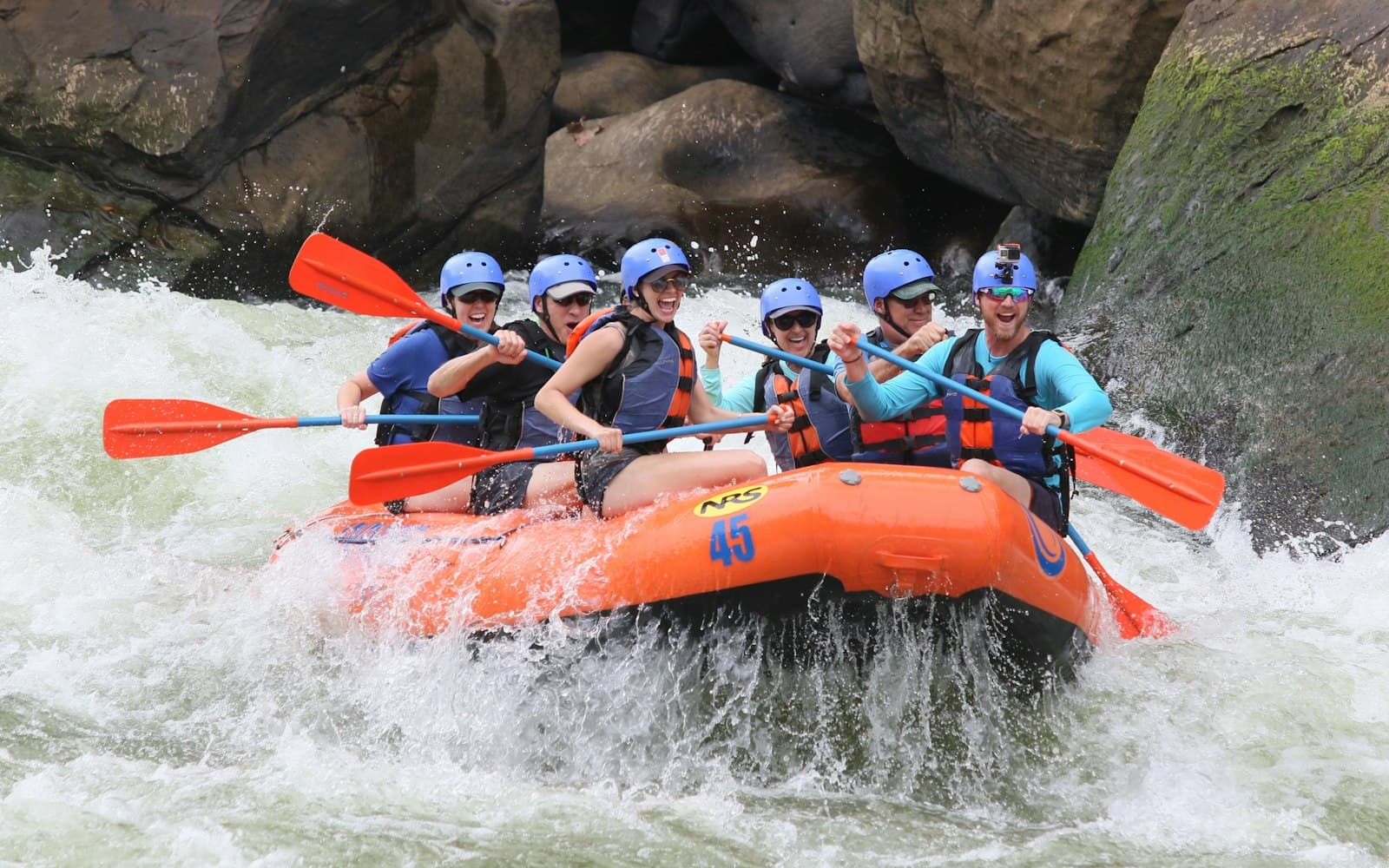
River rafting on the Beas near Kullu runs on the Pirdi to Babeli stretch, about a 25 km drive south of Manali. It is a Grade II–III snow-fed run, best from mid-March to June and again mid-September to late October. A 7 km ride costs around 600 to 1,000 rupees, gear and guide included.
We send guests off to raft the Beas almost every warm-weather week, so this is the version of the guide we wish someone had handed us in our first summer here. Both our homes sit on the same river the rafts run through: the flagship at Badgran is 14 km south of Manali town on the Kullu highway, and Shanag is 4–5 km north near Bahang. From either one, the put-in at Pirdi is an easy morning drive, and we can have the travel desk book your slot the night before over chai.
Where the rafting actually happens
The commercial rafting on the Beas does not happen at Manali. It happens downstream, on the wide, braided section between Pirdi and Jhiri, with Babeli as the usual mid-point and Jhiri as the far take-out. Pirdi is roughly 3 km before Kullu town if you are coming from Manali, so from our Badgran house it is about 12–13 km and 25–30 minutes; from Shanag, add the run down through Manali, so closer to 30 km and 50 minutes. This is why we tell guests at Shanag to leave a little earlier — the river is the same, the drive is not.
You will see rafting operators clustered along the highway at Pirdi with their inflatable rafts stacked on the bank. This is a licensed, regulated stretch; the Kullu district administration fixes the sectors and the rates, which is a good thing — it means the price you pay is not really up for negotiation, and it keeps the fly-by-night outfits off the water.
The grades, in plain language
The Pirdi–Babeli–Jhiri run is rated Grade II to Grade III on the international I–VI whitewater scale. Grade II is moving water with small, regular waves and clear channels — genuinely beginner-friendly. Grade III adds bigger, irregular waves and a few drops that will soak you and get your heart going, but nothing technical that a first-timer with a competent guide cannot handle sitting in the raft.
To be honest with you: in the shoulder months, or after a dry spell, some sections drop closer to easy Grade II and the ride is gentler than the videos suggest. In late May and June, when the snowmelt is at full tilt, the same stretch firms up to a proper, splashy Grade III. If you specifically want the big-wave version, tell us when you book and we will steer you to the peak-flow weeks.
The two seasons — and the two you should skip
The Beas is a snow-fed river, and its mood follows the mountains. There are two good windows and one you should sit out.
- Spring (mid-March to mid-June): melt rises steadily, the water is cold and lively, and by late May–June the flow peaks for the biggest, wettest rides. This is the classic season.
- Post-monsoon (mid-September to late October): the river settles back into clear, strong, predictable flows after the rains. Crisp air, autumn light on the apple valley, arguably the prettiest time to be on the water.
- Monsoon (July to mid-September): usually a hard no. The Beas swells fast and turns silty and dangerous, and rafting is often suspended for safety. Do not push it, and do not trust any operator who says otherwise in a downpour.
- Deep winter (December to February): flows drop and the water is brutally cold; most operators pack the rafts away. Come for the snow instead, and raft on your next trip.
“We have had guests turn up in July heartbroken that the river was closed. It is not the operators being difficult — a monsoon-fed Beas is a genuinely serious river. Come in October and you get the same rapids with half the risk and twice the view.”— A note from the hosts
What it costs (real numbers)
Rates are set by sector and reviewed by the administration, so treat these as honest working figures rather than a fixed tariff. The short 7 km Pirdi-to-Babeli run generally runs around 600–1,000 rupees per person. The longer ~14 km Pirdi-to-Jhiri stretch is usually in the 1,000–1,500 rupees range. Both include the raft, guide, life jacket, and helmet.
Two things worth knowing. First, the per-person rate often assumes a shared raft of 6–8 people; if you want a private raft for just your couple or family, expect to pay for the empty seats. Second, the riverside photo-and-GoPro sellers are a separate charge — usually 300–500 rupees for the clip — and entirely optional. We are happy to have our travel desk confirm the current sector rates for you before you leave, so there are no surprises on the bank.
Safety gear and how the run is managed
On a legitimate operator you will be given a life jacket (buoyancy aid) and a helmet, both non-negotiable — put them on properly and keep them on. Each raft carries a trained guide who runs the paddle commands, and the busier sectors have safety kayakers and throw-bags positioned along the run. Before you push off, the guide gives a short briefing: how to hold the paddle, the commands for forward and back, what to do if you go into the water, and how to get pulled back in. Listen to it even if you have rafted before — every river has its own quirks.
Our honest safety checklist for guests, learnt from sending people down for a few years now:
- Rafting is not advised for very young children, pregnant guests, or anyone with a heart or back condition — ask the operator's minimum age, usually around 14 for this stretch.
- You do not need to know how to swim, but you must wear the life jacket correctly and stay calm if you tip.
- Never raft with an operator who skips the safety briefing or is short on jackets and helmets — walk away and find another.
- Do not raft drunk, and do not let anyone talk you onto the water in heavy rain or high, muddy flow.
How cold is the water, really
Cold. This is glacier and snowmelt straight off the peaks above Solang and beyond, so even on a warm 25°C afternoon in the valley, the water sits somewhere around 8–12°C in the main season, and colder in early spring. You will gasp at the first big splash — everyone does. The upside is that a soaking on a hot day is genuinely refreshing; the downside is that a long, wet ride can leave you shivering, so we tell guests to dress for the water, not the weather.
What a first-timer should actually expect
Plan for roughly half a day. The rafting itself is short — the 7 km run is often over in 25–40 minutes depending on flow — but with the drive, kitting up, the briefing, the ride, and drying off, you will be out for two to three hours. It is exhilarating rather than terrifying: mostly gentle paddling through clear water with three or four punchy rapids where the raft bucks, everyone screams, and you come out laughing and drenched.
What to bring and wear, from experience: quick-dry clothes or shorts and a t-shirt you do not mind soaking, secured river sandals or old trainers (not flip-flops — they float away), a change of dry clothes and a towel waiting in the car, and sunscreen, because the reflected glare off the water burns fast. Leave phones, wallets, and anything that cannot get wet locked in the vehicle; the raft is no place for them. If you wear glasses, use a strap.
Fitting it into your day from our farmstead
Because Pirdi sits south of Manali toward Kullu, rafting pairs neatly with a day spent in that direction rather than doubling back. From our Badgran home you are already halfway there. Many of our guests raft in the late morning, dry off, and stop for a riverside lunch, or push on to see the Great Himalayan National Park gate or Naggar Castle on the way back up the valley. Come home to the orchard by evening, and we will have the bonfire going and something warm out of our kitchen waiting — a hot plate of siddu after a cold river is one of life's small, correct pleasures.
Book your slot a day ahead in peak season (April–June and the Diwali weeks fill up), keep the morning free in case flows shift, and treat the river with the respect a snow-fed Himalayan run deserves. Tell us at check-in that you want to raft, and we will handle the timing, the transport, and the sector booking so all you have to do is show up, paddle, and scream.

Written by the family that runs Persimmon Farmstead — the two boutique hotels near Manali. We write about the valley the way we'd tell a friend at the kitchen table.
Good to know
Where do you go river rafting near Manali?
The commercial rafting is on the Beas between Pirdi and Jhiri, near Kullu — not at Manali itself. Pirdi, the usual put-in, is about 3 km before Kullu town, roughly 25 km and 30 minutes south of Manali. From our Badgran farmstead it is a 25–30 minute drive; from Shanag, closer to 50 minutes.
What is the best season for rafting on the Beas?
Two windows: mid-March to mid-June, when snowmelt makes the river lively and peaks for big rides in late May–June, and mid-September to late October, when post-monsoon flows are strong and clear. Avoid July to mid-September — monsoon swells make it dangerous and rafting is often suspended. Deep winter is too cold and low.
How much does river rafting near Kullu cost?
Rates are set by sector. The short 7 km Pirdi-to-Babeli run is usually around 600–1,000 rupees per person, and the longer ~14 km run to Jhiri around 1,000–1,500 rupees. Both include the raft, guide, life jacket and helmet. Riverside GoPro photos are a separate optional charge, roughly 300–500 rupees.
Is Beas rafting safe for first-timers and non-swimmers?
Yes, on a licensed operator. The Pirdi stretch is Grade II–III, beginner-friendly with a trained guide, mandatory life jacket and helmet, and safety kayakers on busy sectors. You do not need to swim, but you must wear the jacket properly. It is not advised for very young children, pregnant guests, or heart and back conditions.
How cold is the water?
Very cold — it is glacier and snowmelt off the high peaks, sitting around 8–12°C in the main season and colder in early spring, even when the valley air is a warm 25°C. The first splash takes your breath away. Dress for the water in quick-dry clothes, and keep a dry change and towel in the car.
Tell us your dates. We'll confirm, personally.
You send a request, a real host confirms it by WhatsApp — usually within a few hours.