
Old Manali: A Complete Guide
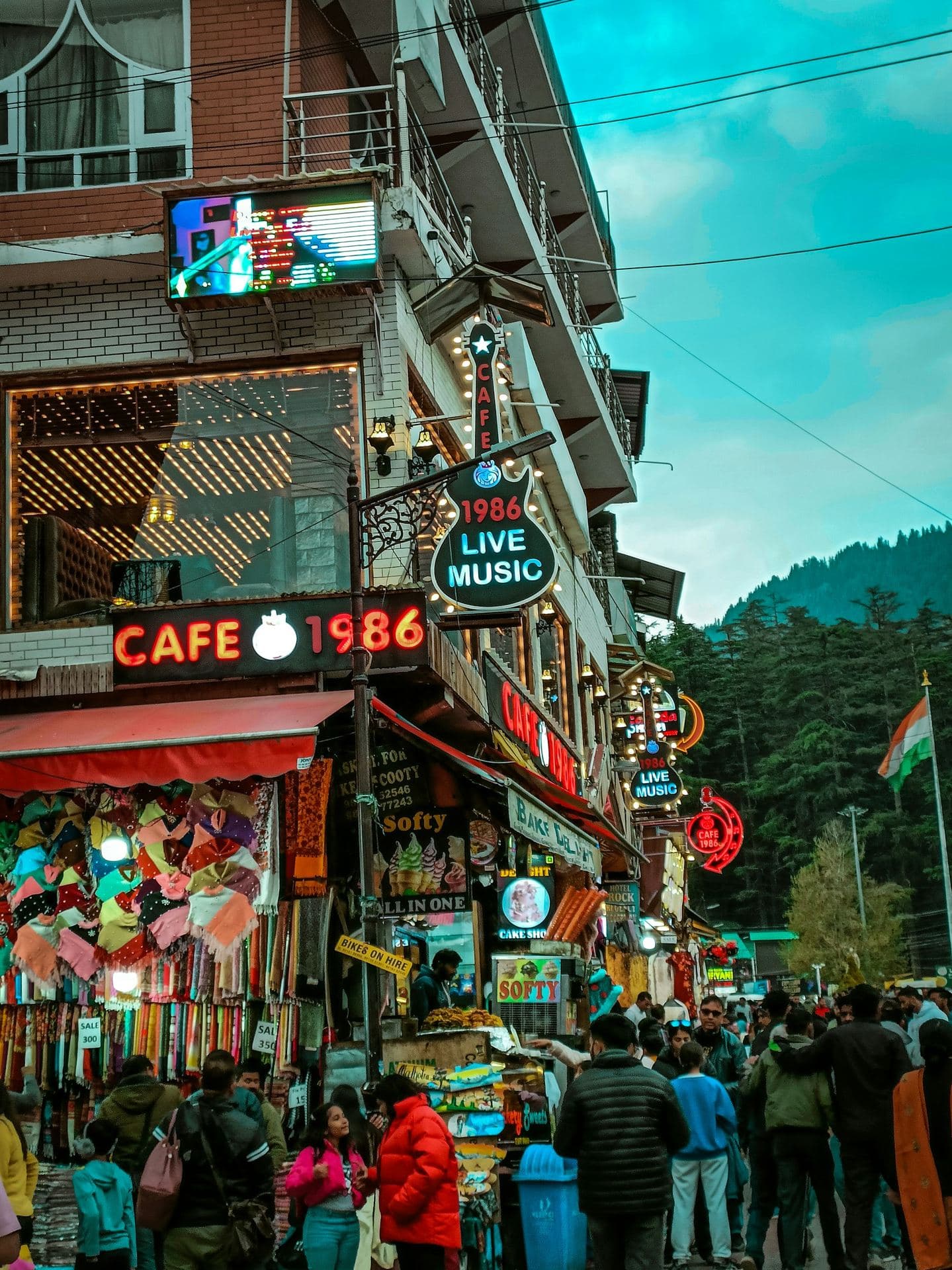
Old Manali is the old riverside village 2-3 km uphill from Manali's Mall Road, on the far bank of the Manalsu stream. It's the cafe-and-backpacker heart of Manali: Manu Temple, stone-and-wood houses, apple orchards, and a lane of music cafes. It comes alive March to June and empties out by January.
We tell almost every guest who checks in at Badgran the same thing on their first evening: give Old Manali one slow half-day, not a rushed hour. From our flagship at 14 Mile it's roughly a 30-40 minute drive north (about 16 km, longer if the Mall Road jam is bad); from our Shanag home near Bahang it's closer, about 15-20 minutes and 6-7 km, because Shanag sits on the same road that climbs up past Old Manali toward Solang. Either way you end up in the same village, and it is genuinely a different animal from the main-town Mall Road side.
Old Manali vs the Mall Road side: two different towns
People say "Manali" as if it's one place. It isn't, really. Mall Road Manali, down in the main town, is the busy commercial bit: taxi stands, woollen shops, the bus terminus, families with strollers, ATMs, the crowd. It's where you go for practical things and where the Volvo drops you. Old Manali is up and across the river, and it slows right down. The two are only about 2.5 km apart, but the drive can take 15-20 minutes in season because the road up is narrow and one bridge does most of the work.
The short version: Mall Road is for shopping, food courts and getting things done. Old Manali is for lingering over a coffee, second-hand books, live music, and doing very little on purpose. If you have one evening, we usually point couples and solo travellers to Old Manali and send families with small kids and older parents to the flatter, easier Mall Road stretch.
The cafes: what Old Manali is actually famous for
The cafe scene is the reason most people come up here. The main lane past the Manalsu bridge is lined with them: rooftop places looking over the orchards, Israeli and continental menus (a legacy of the long-staying traveller crowd), wood-fired pizzas, hummus, banana pancakes, filter coffee, and endless masala chai. Many have cushions on the floor, slow wifi, and a guitar in the corner that somebody will eventually pick up.
A few names that have been up here for years and that our guests keep coming back to: Cafe 1947 by the stream (live music, the water running past your table), Drifters' Inn and Cafe, Lazy Dog Lounge on the riverside, The People / Renaissance for a rooftop view, and Rocktail and German Bakery types for a slower breakfast. New places open and close every season, so don't hold us to any one name; the vibe is the constant, not the signboard.
An honest word on money, since we can talk about other people's prices even if we never talk about our own rooms: a cafe meal for two with coffee tends to land somewhere around 500-900 rupees, and a good coffee is usually 150-250. It's not inexpensive-inexpensive, it's traveller-cafe pricing, and you're paying partly for the river-and-orchard seat.
“Old Manali runs on cafe time, not clock time. Order the coffee, then order a second one, and let the afternoon go where it wants. That is the whole point of the place, and it's the one thing the tour buses never figure out.”— A note from the hosts
Manu Temple: the quiet centre of the old village
Above the cafes, at the top end of the village, sits Manu Temple (Manu Maharishi Mandir), the reason the settlement is here at all. It's dedicated to the sage Manu, and Manali takes its name from him (Manu-Alaya, the home of Manu). The temple is a modest wood-and-stone pagoda-style structure, not grand, and that's its charm. It's a working village shrine, not a monument.
Getting up to it is the workout: from the cafe lane it's a 10-15 minute uphill walk on a stone path lined with tiny shops selling shawls, prayer flags and momos. Entry is free. Go early morning if you want it near-empty and the light on the peaks behind. Dress modestly, leave your shoes as marked, and don't photograph inside the sanctum. It's a good, honest half-hour that most cafe-only visitors skip.
The river and the bridge
The Manalsu khud (stream) is what splits old from new Manali, and the small bridge over it is effectively the gateway to the old village. The water comes straight off the snow, so it's loud, cold and clear, and the cafes closest to it (like 1947) build their whole appeal around sitting with your feet almost in it. Below the confluence, the Beas is the bigger river you'll have crossed on the way up.
Don't get in the water. We say this plainly to every guest: the current is far stronger than it looks and the stones are slick. It's a river to sit beside with a coffee, photograph, and dip a hand in, not one to wade or swim. Every season the local rescue teams pull people out who thought the shallow-looking edge was safe. Enjoy it from the bank.
Shopping in Old Manali
Old Manali shopping is small-scale and hippie-market in flavour, quite different from Mall Road's bigger woollen showrooms. Along the lane and up toward Manu Temple you'll find:
- Silver jewellery, beads and gemstone rings from little counter shops
- Kullu shawls, caps, thick woollen socks and yak-wool blankets (bargain gently; the fixed-price Bhutti/Kullu weaver showrooms on Mall Road are where you go if you want the certified real thing)
- Pashmina and shawls of very mixed quality; ask what's wool and what's acrylic before you pay
- Prayer flags, singing bowls, incense and Tibetan-style curios
- Second-hand books and little record/tape corners in some cafes
- Leather journals, patchwork bags and the usual backpacker-trail clothing
Treat Old Manali as the place for souvenirs, gifts and a browse, and Mall Road as the place for a serious shawl or jacket purchase. And haggle kindly, these are small family shops, not a big bazaar.
The season it comes alive, and the season it shuts down
This is the thing nobody tells first-timers, so we always do. Old Manali is seasonal in a way Mall Road isn't. Roughly:
- March to June: peak. Everything is open, the cafes are buzzing, live music most nights, warm days (about 15-25 C) and cool evenings. This is the classic Old Manali experience.
- July to mid-September (monsoon): quieter and green, fewer crowds, occasional rain and the odd landslip on the approach roads. Cafes stay open but the energy dips. Good for a slower, cheaper-feeling trip.
- Late September to November (autumn): our favourite. Apple harvest, golden orchards, clear mountain views, thinning crowds, most cafes still running.
- December to February (deep winter): many Old Manali cafes and guesthouses close or run on skeleton hours. It gets cold (often 0 to -5 C at night), snow is possible in the village, and the traveller crowd is gone. A handful of places stay lit for the New Year rush, but by mid-January the lane is sleepy and half-shuttered.
So if a cafe you read about online seems shut when you visit in January, it isn't gone, it's just hibernating until March. If a lively Old Manali night is the whole reason for your trip, come between March and early November.
How to do Old Manali well (a host's plan)
Here's how we'd spend an unhurried half-day, whether you're staying with us at Badgran or up at Shanag. Drive or taxi up (a local taxi from the main town to Old Manali is usually around 300-500 rupees one way; parking in the village is tight in season, so go earlyish). Park near the bridge, walk up the lane, do the Manu Temple climb first while your legs are fresh, then reward yourself with a long lunch at a riverside cafe on the way down. Browse the shops in the late afternoon when the light softens, and if you're there in season, stay for the live music that starts up around dusk.
A few honest cautions from years of sending guests up: the roads are narrow and the driving is not for the nervous, weekends and peak season clog the approach badly, and the whole village is built on a slope, so wear proper shoes, not flip-flops. Old Manali rewards people who slow down and punishes people in a hurry. Come up for the afternoon and evening, let it be lazy, and drive back to the quiet of the orchard for the night. That combination, the buzz of the old village and then the dark and the stars back at the farmstead, is honestly the best way we know to do this valley.
And come back to us with your cafe recommendations. We keep a running list from guests, because the lane changes every year, and the best new rooftop is usually one somebody stumbled into last week, not one in any guidebook, including this one.

Written by the family that runs Persimmon Farmstead — the two boutique hotels near Manali. We write about the valley the way we'd tell a friend at the kitchen table.
Good to know
How far is Old Manali from Mall Road, and how do you get there?
Old Manali is about 2.5 km from Mall Road, roughly 15-20 minutes by car in season because the road up is narrow and crosses one small bridge. You can walk it in around 30-40 minutes uphill. A local taxi one way is usually about 300-500 rupees. From our Badgran farmstead it's a 30-40 minute drive; from Shanag, about 15-20 minutes.
What is Old Manali famous for?
Old Manali is the old riverside village known for its cafe-and-backpacker culture: rooftop and stream-side cafes with continental and Israeli-style menus, live music, Manu Temple, apple orchards, stone-and-wood houses, and small hippie-market shopping for silver, shawls and curios. It's the slower, artier counterpart to the busy Mall Road side of Manali.
Is Old Manali open in winter?
Partly. Old Manali is strongly seasonal. From March to June and again in autumn most cafes and shops are open and lively. From December to February many close or run reduced hours, apart from a short New Year rush. By mid-January the main lane is quiet and half-shuttered, reopening properly around March. For the full cafe scene, visit March to early November.
Can you swim or get in the river at Old Manali?
No. The Manalsu stream that runs through Old Manali is snowmelt-fed, very cold, fast and deceptively strong, with slippery stones. It's a river to sit beside with a coffee and photograph, not to wade or swim in. Rescue teams pull people out most seasons who misjudged the shallow-looking edge. Enjoy it safely from the bank.
Is Old Manali or Mall Road better to visit?
They serve different moods. Mall Road, in the main town, is for shopping, food courts, taxis and practical errands, and is flatter and easier for families and older visitors. Old Manali, uphill across the river, is for cafes, live music, second-hand books and slow afternoons, and suits couples and solo travellers. Ideally do both: shop on Mall Road, linger in Old Manali.
Tell us your dates. We'll confirm, personally.
You send a request, a real host confirms it by WhatsApp — usually within a few hours.