
Manali in June: What the Busiest Month Actually Feels Like
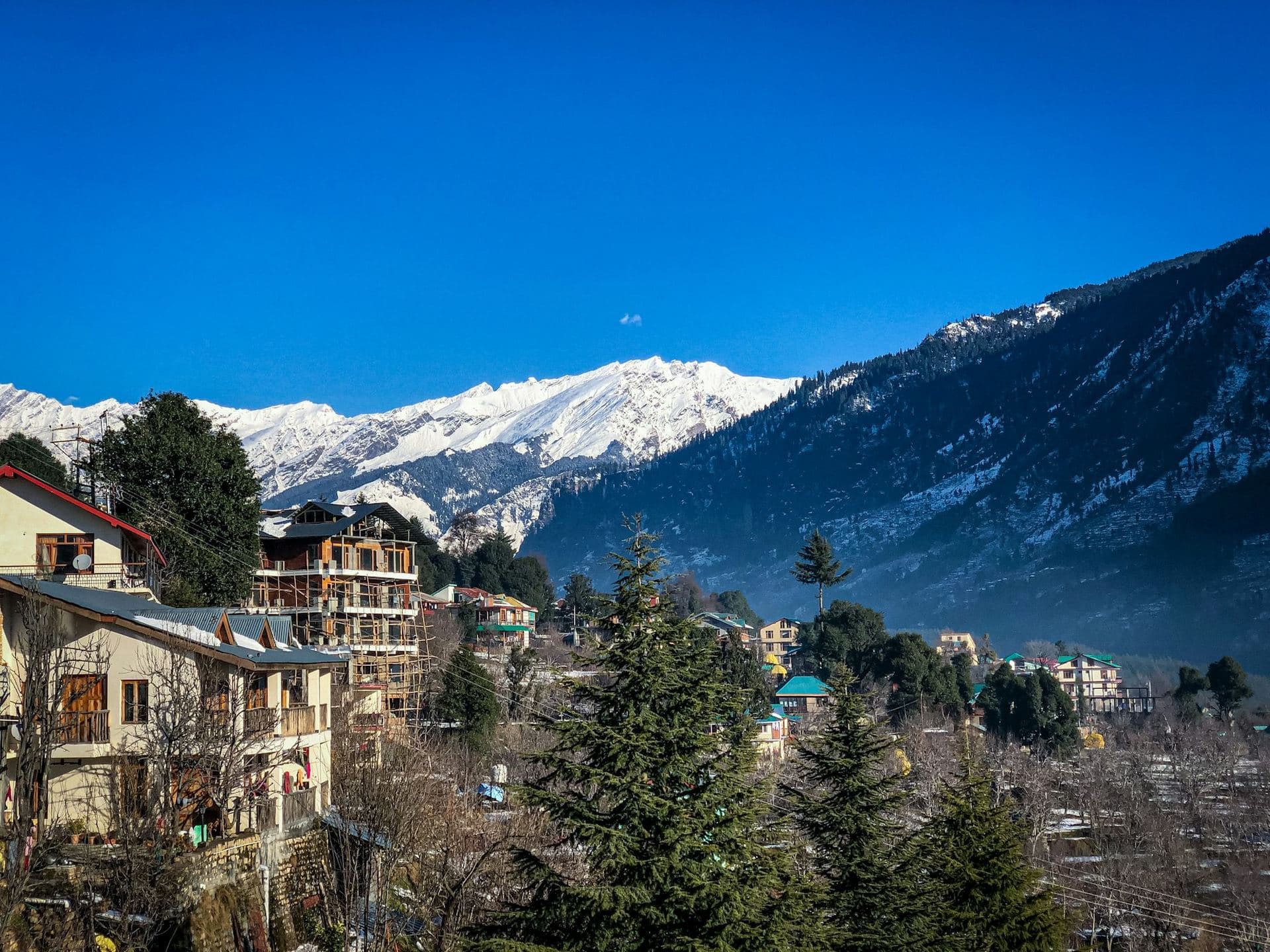
June is the month everyone means when they say they are going to Manali. School holidays across north and west India line up, the plains are running at 42-45C, and the entire country seems to remember at once that there are cool green mountains a night's train ride away. From our orchard at 14 Mile we watch the highway thicken through the first week of June until, by the middle of the month, the Kullu-Manali road below us carries a slow ribbon of cars most of the day. It is the busiest, warmest, most alive Manali gets. It is also the month where a little planning changes your holiday completely, and where knowing what is actually true about the weather and the roads saves you real money and real hours.
We have run both our homes through five Junes now, and guests ask us the same handful of things every year. So here is the honest version, the one we give people on WhatsApp before they book, written down properly.
The weather: warm days, cool nights, and the pre-monsoon edge
June in Manali town (around 2,050 m) gives you daytime highs of roughly 20-25C and nights that drop to about 10-14C. That is the sweet spot people come for. You can walk the Mall in a t-shirt at noon and want a light fleece by 8pm. Down at our Badgran house at 14 Mile, which sits a little lower, afternoons feel a touch warmer; up at our Shanag home toward Bahang, nights are noticeably crisper because you are closer to the Solang side and the tree line.
Two things trip people up. First, the sun at this altitude is strong even when the air is cool. Guests who spend a day at Solang or Rohtang without a hat come back pink. Bring sunscreen and sunglasses; the UV is not what your phone's temperature reading suggests. Second, June is pre-monsoon, not dry. Early June is usually settled and bright, but from roughly the third week you start getting afternoon build-up: a clear morning, cloud stacking over the ridges by 2-3pm, and a sharp shower that clears by evening. It is rarely a wash-out. It does mean the smart move is to do your big outing in the morning and keep the afternoon loose.
“We tell every June guest the same thing: front-load your day. Leave for Solang or a trek head by 7-8am, be back by early afternoon, and let the orchard hammock take the 3 o'clock cloud. The people who fight the crowd at 11am and the shower at 3pm are the ones who come home tired.”— Your hosts at Persimmon Farmstead
The crowds are real, and where they actually are
Let us not pretend otherwise: June is peak season and Manali is busy. But the crowding is very concentrated, and once you understand the geography it stops being a problem. The pressure points are three: the Mall Road and Old Manali in the evenings, the Atal Tunnel and Sissu on the far side, and Solang Valley on any clear day. Everywhere else, including the orchard-and-village belt where we are, stays quiet.
This is genuinely why we are where we are. Our Badgran home is about 14 km south of Manali town on the highway, roughly a 30-40 minute drive depending on the day's traffic. Our Shanag home is about 4-5 km north of town toward Solang, which puts you on the right side of the bottleneck for early trek and Solang starts. Both mean you sleep in orchard quiet and drive into the busy bits deliberately, rather than living inside them.
A few honest crowd notes for June:
- The Atal Tunnel to Sissu and Lahaul is spectacular and, on a sunny June weekend, jammed. Traffic backs up at the north portal from mid-morning. If you want to do it, go on a weekday and leave by 7am. It is about 25 km from Manali town to the tunnel, then Sissu is another 10 km or so beyond.
- Solang Valley is a 40-60 minute drive from town in normal conditions and can take far longer when the ropeway queue traffic builds. The paragliding and zorbing there run on holiday-weekend queues; go early or accept the wait.
- Rohtang Pass (about 51 km, 3,980 m) needs a permit and is capped by a daily vehicle quota. In June it is usually open, but the road is slow and the permit must be arranged in advance. More on that below.
- Old Manali's cafes are lovely and heaving after dark in June. Lunch there is calmer than dinner. Weekday afternoons are the civilised window.
Trekking season opens: Hampta and the early routes
June is the real start of the trekking calendar around here, and it is one of the best reasons to come now rather than in the monsoon that follows. The high passes have shed enough snow to be walkable, the meadows are green, and the rivers are running full with snowmelt.
The headline trek from this side is Hampta Pass (about 4,270 m), a 4-5 day crossing from the Kullu valley over to the Lahaul/Spiti side and Chandratal. The classic base is Jobra, reached by road from Manali via Prini and the Hamta side; the drive to the road-head is roughly 1.5-2 hours depending on the state of the track. What makes Hampta special is the contrast: you start in pine and green meadows and walk out into the brown, moon-like desert of Lahaul in a matter of days. Early-to-mid June often still has old snow on the pass itself, which is part of the appeal but means you want a proper organised group with a guide, not a solo improvisation.
Honest guidance if a trek is why you are coming:
- Book Hampta through an established operator that runs fixed departures. A guided, all-inclusive multi-day Hampta trek typically runs in the region of Rs 8,000-13,000 per person depending on the operator, group size and whether Chandratal is added. Treat that as a ballpark, not a quote.
- In early June, snow on the pass means gaiters, proper boots and a guide who knows the current line. It is not a beginner solo route this early.
- Acclimatise. Even if you feel fine, spend a night or two at Manali altitude before a high crossing. Staying with us for a couple of days before your trek departure is a genuinely useful buffer, not just a nicety.
- For a gentler taste, day walks in the Solang and Shanag area, or up toward the old forest paths behind the villages, give you high-meadow scenery without the multi-day commitment. We can point you to the quiet ones from either house.
Rohtang, Atal Tunnel and the permit question
This is the single most common June confusion, so here is the plain version. There are two ways over the main ridge north of Manali. The Atal Tunnel (opened 2020) needs no permit and takes you under the mountain straight to Sissu and Lahaul in minutes. Rohtang Pass, the old high road over the top, is the scenic one for snow and views, and it does need a permit.
Rohtang permits are issued online through the Himachal government portal, are capped daily, and cost a nominal permit fee plus a green tax and congestion charge that together come to a few hundred rupees per vehicle. They sell out for peak dates in June, and Rohtang is closed to tourist vehicles on Tuesdays for maintenance. If you are set on Rohtang, decide your date early and have someone arrange the permit a few days ahead; local taxi operators and hotels routinely handle this. If all you want is snow and the far-side desert, the tunnel to Sissu delivers it with far less faff, which is what we suggest to most families.
Getting up here, and what it costs in June
Most guests reach us overnight from Delhi. Volvo-type AC sleeper coaches run Delhi to Manali in roughly 12-14 hours, and in June fares climb with demand: expect somewhere in the region of Rs 1,200-2,500 per seat, higher on holiday weekends, and book well ahead because they fill. If you are driving, it is about 530 km and 12-14 hours from Delhi via Chandigarh and Mandi. A private cab from Delhi is convenient but pricey in season. Kullu's Bhuntar airport is about 50 km south of Manali and roughly 10 km south of our Badgran house, but flights are limited and weather-dependent, so we rarely tell people to rely on them. Chandigarh (about 8-9 hours by road) is the usual air-plus-drive combination.
Once you are here, a local taxi for a Solang half-day or a town errand runs on fixed union rates rather than meters; ask for the rate before you set off and it is usually a few hundred to a couple of thousand rupees depending on distance and waiting. We are always happy to line up a driver we trust rather than leaving you to the taxi stand.
Why June suits families, and one caution about the river
June is the family month, and it works because the weather asks nothing of small children: no need for the heavy layers of December, no monsoon slush, just warm days and cool nights. The activities that delight kids are all running now. Solang has the ropeway, zorbing and short pony rides. There is trout and river life to watch. And an orchard is, frankly, the best playground a child can have, room to run under the apple and persimmon trees while the adults do very little. We are pet-friendly too, so the family dog is not left behind.
The one genuine caution for June is water. The Beas and its tributaries are at their fullest and fastest with snowmelt this month, and the water is bitterly cold and stronger than it looks. Every year there are incidents with people wading in for photos. Enjoy the river from the bank, keep children well back from the edge at Kullu and along the highway stretches, and do not let a calm-looking pool tempt anyone in. That is the only thing about June we are genuinely firm about.
For the rest, June is easy. Long light evenings, the smell of the orchard after the afternoon shower, dinner on the table because food is the thing we care about most here, and the mountains finally open for the year. Come in the first half of the month if you want the driest weather and slightly thinner crowds; come in the second half and simply plan around the afternoon cloud. Either way, message us on WhatsApp before you lock your dates so we can tell you which of our two homes suits your plan, and we will sort the drivers, the permits and the trek timing from there.

Written by the family that runs Persimmon Farmstead — the two boutique hotels near Manali. We write about the valley the way we'd tell a friend at the kitchen table.
Good to know
Is June a good time to visit Manali, given the crowds?
Yes, if you plan around the peak. June gives you the warmest, most pleasant weather of the year (20-25C days) and the start of trekking season. The crowds are concentrated at Solang, the Atal Tunnel and the Mall Road in the evenings. Stay in the quieter orchard belt, do your big outings before 9am, and the busyness barely touches you. Early June is slightly calmer than the second half.
Will it rain in June in Manali?
June is pre-monsoon, so early in the month is mostly bright and settled. From roughly the third week you get afternoon build-up: clear mornings, cloud over the ridges by mid-afternoon, and a short sharp shower that usually clears by evening. It is rarely a full wash-out. Front-load your day and keep afternoons flexible and you will barely lose time to it.
Do I need a permit for Rohtang Pass in June?
Yes. Rohtang requires an online permit through the Himachal government portal, with a daily vehicle cap plus a small green tax and congestion charge (a few hundred rupees per vehicle). It sells out on peak June dates and is closed to tourists on Tuesdays. The Atal Tunnel to Sissu needs no permit and reaches the far-side snow and desert far more easily, which is what we suggest for most families.
Can I do the Hampta Pass trek in June?
June is one of the best windows for Hampta (around 4,270 m). Early June often still has snow on the pass itself, so go with an established operator running fixed departures rather than attempting it solo. A guided multi-day trek typically runs around Rs 8,000-13,000 per person depending on group size and whether Chandratal is included. Spend a night or two at Manali altitude first to acclimatise.
Tell us your dates. We'll confirm, personally.
You send a request, a real host confirms it by WhatsApp — usually within a few hours.