
Manali in January: A Deep-Winter Guide From the Orchard
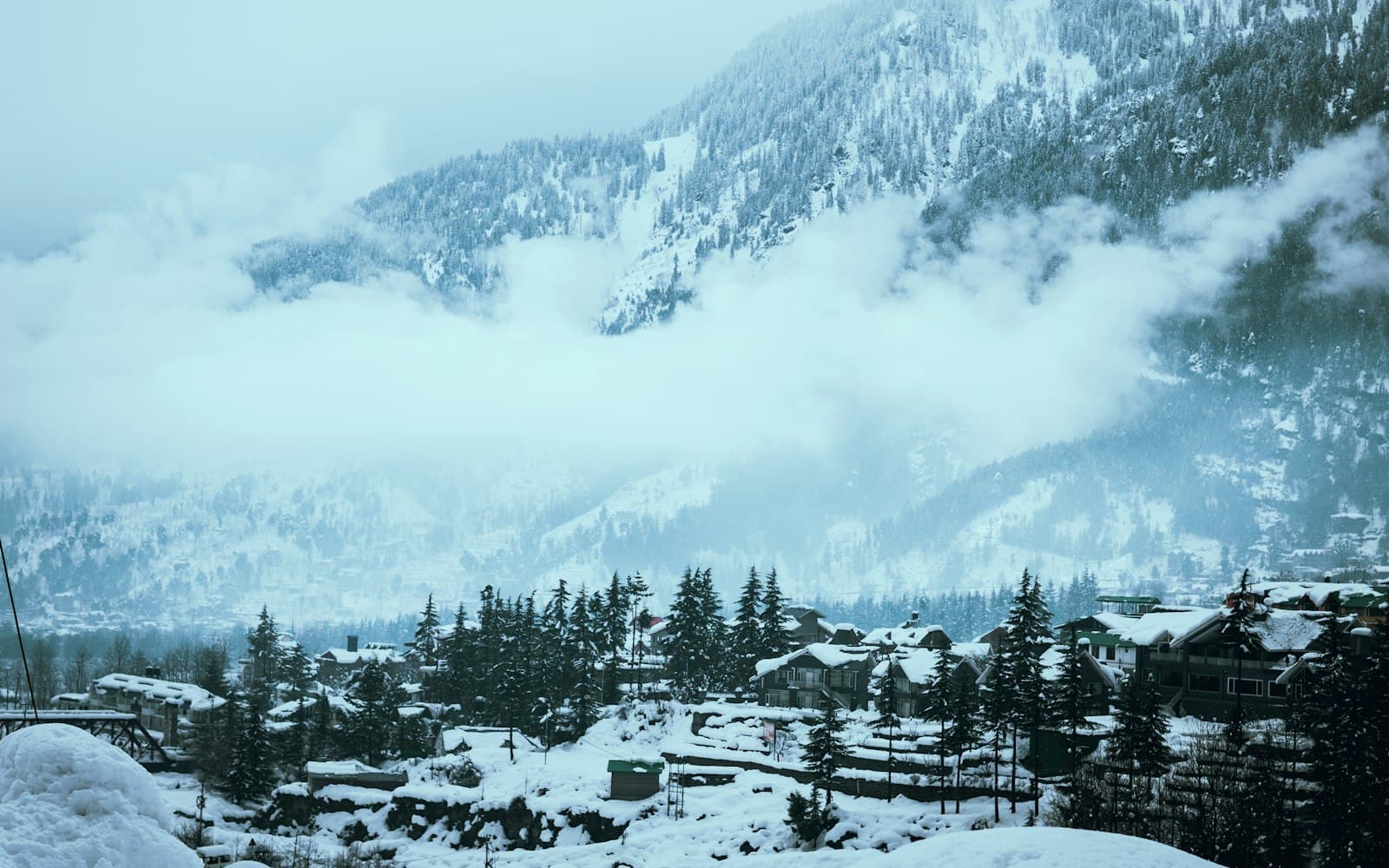
January is the month people picture when they picture Manali in snow. It is also the month most first-time visitors misjudge, because the postcard version and the lived version are not quite the same thing. From our orchard at 14 Mile in Badgran, we watch the valley change through the whole cold season, and January is the deep of it: short daylight, hard frost, and the real chance of snow falling on the property rather than only up on the passes.
We wrote this the way we'd explain it to a friend who called and asked, 'Is January a good time to come?' The honest answer is yes, if you know what you're walking into. Here is what deep winter looks like from where we stand, and how to plan around it.
What the weather actually does in January
Manali town sits at roughly 2,050 m. Our Badgran home is a little lower on the highway; our Shanag home near Bahang is higher, closer to 2,200 m and noticeably colder at night. January is the coldest month across all of it. Expect daytime highs of about 2 to 8°C when the sun is out, and nights that sit below freezing, commonly minus 2 to minus 7°C, colder still after a fresh snowfall or a clear, still night.
Those daytime numbers hide something important: the difference between sun and shade is enormous. A south-facing terrace at midday can feel almost mild, pleasant enough to sit out with tea. Step into the shadow of the orchard or behind a building and it drops back to freezing within minutes. Plan your day around the sun, not the clock.
Snow is a chance, not a schedule. Some Januaries deliver two or three proper snowfalls in town, with the orchard under a clean white blanket for days. Other years the town stays brown and hard-frosted while the snow holds to the higher ground above Solang and Kothi. We can't promise you a white morning, and anyone who does is guessing. What we can say is that January carries the heaviest odds of the season, more reliable than December's early flurries and before the softer, wetter snow of February.
When it does snow, it usually comes with a western disturbance: a day or two of grey, falling temperatures, then the snow, then a gap of hard, brilliant blue sky. Those clear post-snow mornings are the best of the whole winter. They are also the coldest.
“A host note: our orchard road ices over by mid-December and stays treacherous through January. The tarmac looks dry in the afternoon and turns to black ice by seven in the evening. If you're driving up in your own car, we'd genuinely rather you park where it's safe and let us help with the last stretch than have you slide it into a ditch. We've seen it happen more than once.”— The hosts
Roads, the Atal Tunnel, and getting here
The road you'll care about is the main Chandigarh–Manali highway. In January it stays open the vast majority of the time, but heavy snowfall can cause temporary closures and long clearing delays, especially on the stretch around Kullu and up towards Manali. The realistic play is to keep a buffer day and not book a same-day onward flight or train out of Chandigarh or Delhi with no slack.
Drive time from Chandigarh to Manali is roughly 8 to 10 hours in good winter conditions, longer after snow. From Delhi, budget 12 to 14 hours, usually done as an overnight Volvo bus. The Kullu–Manali airport at Bhuntar is about 50 km south of town and around 10 km from our Badgran home, but winter flights are frequently cancelled or delayed by weather and low visibility, so we tell guests never to treat that flight as guaranteed.
The Atal Tunnel is the big variable people ask about. The tunnel itself, connecting Manali side to Lahaul and Sisu, generally stays open through winter and is a genuine draw: you drive through 9 km of mountain and come out into a starker, snowier landscape on the far side. But 'the tunnel is open' and 'you can drive freely into Lahaul' are two different things. After heavy snow the tunnel or its approaches close temporarily, and the road beyond towards Sisu and Koksar can be shut or restricted at short notice. Check the local status the morning you plan to go, not the week before. We keep an ear on it and will tell you honestly whether it's a good day for it.
The high passes are firmly shut. Rohtang Pass proper is closed through winter, as is the route to Spiti via Kunzum. If a trip beyond the tunnel into Lahaul is what you're after, January is possible on clear days but weather-dependent every single time.
What's open and what's closed
January runs quiet, and that's much of its charm. The New Year crowds thin out sharply after the first week; by the second week of January the town has exhaled and you get Manali closer to how it should feel. Old Manali is at its sleepiest, with a good number of cafés and guesthouses shut for the season, though a handful of the year-round places stay open and cosy. The Mall Road in new Manali stays fully active all winter.
Here's the practical picture of what you can and can't do:
- Solang Valley (about 14 km from town, roughly 40–50 minutes on a clear day) is the main snow-play hub. When there's snow, expect zorbing, snow tubing, ATV rides, and short ropeway/gondola runs. Activity prices are negotiated on the spot and inconsistent; as a rough guide, snow-play rides run a few hundred rupees each and the paragliding, when it operates, is generally not a January activity. Haggle, and agree the price before you sit down.
- Skiing at Solang is basic and gear-hire driven when snow allows; serious skiers go to Gulaba or book a package operator. Casual visitors mostly do a guided beginner slide rather than real skiing.
- The Atal Tunnel and the Sisu side are the standout day trip in clear weather. A full-day cab from Manto the tunnel and Sisu typically runs in the region of ₹3,000–5,000 depending on the car and how long you keep it.
- Hadimba Temple, Manu Temple, the Vashisht hot springs, and the Tibetan monasteries in town all stay open year-round and are lovely under snow with almost no crowds.
- Trekking is limited. High-altitude treks are out. Gentle walks in the forest above Old Manali and around the orchard villages are the right scale for January, and often the most memorable part of a trip.
Vashisht's hot springs deserve a mention: sitting in naturally hot sulphur water with cold air on your face and snow on the roofs is one of the genuine pleasures of a Manali winter, and it costs nothing.
How we'd actually spend a January day here
The rhythm that works in deep winter is slow mornings and sharp, short outings. It gets light late and dark by around 5:30 pm, so there's no point rushing at 7 am into the frost. We'd have a long breakfast while the sun climbs over the ridge, head out mid-morning when the roads have softened, do one main thing, and be back before the evening ice sets in.
A lot of our guests find that the trip they remember isn't the snow-play at Solang, it's the unhurried part: reading by a window while it snows outside, walking the orchard in fresh powder, eating slowly because there's nowhere you have to be. January is not a month for cramming an itinerary. It rewards people who let a place be quiet.
Because we're a food-first house, this is also the season our kitchen does its best work. Winter cooking here leans into slow, warm food, and long meals are half the reason to come up in January at all. Guests tell us the evenings, with the heating on and something hearty coming out of the kitchen, are what they book us back for. You can read more about how we approach that on our dining page.
A note for families and for anyone bringing a dog
Children generally love the snow and hate being cold, so the trick with young kids is short bursts outdoors and a warm base to retreat to. Waterproof outer layers matter more than thick ones. We're set up for families and happy to advise on pacing a trip so it doesn't become a battle of numb fingers.
We're pet-friendly, and dogs tend to have a wonderful time in orchard snow. Two honest cautions: grit and ice can hurt paws on the roads, and the cold is real for smaller or short-coated dogs at night, so bring what your dog needs to stay warm indoors. If you're travelling with a dog, tell us in advance on WhatsApp and we'll sort out the right room and the practicalities.
What to pack for deep winter
People consistently under-pack for January and then buy overpriced woollens on the Mall Road. Get it right before you leave. The principle is layers you can add and shed as you move between sun and shade, and proper protection for your feet.
- A genuinely warm insulated jacket, not a fashion coat. Down or a good synthetic puffer.
- Thermal base layers, top and bottom. These do more than any single heavy garment.
- Waterproof shoes or boots with grip. This is the item people skip and regret. Smooth-soled sneakers on iced roads are how ankles get twisted.
- Wool socks (spares included), a warm hat that covers your ears, and insulated gloves. Extremities are what get cold first.
- Sunglasses and sunscreen. Snow glare at altitude is intense on clear days and burns skin that never sees the sun otherwise.
- Lip balm and moisturiser; the dry cold cracks skin fast.
- A power bank. Cold drains phone batteries alarmingly quickly, and you'll want the phone for photos and maps.
- Any regular medication in hand luggage, plus basics for cold and stomach, since the nearest good pharmacy may be a drive away in bad weather.
One more thing on the cold at night: both our homes are built and heated for winter, but the walk from car to door, or a late trip out to look at the stars, will remind you exactly how cold minus five feels. Keep one warm layer within reach at all times and you'll be comfortable rather than caught out.
So, is January the right month for you?
If you want the best odds of snow, the quietest town of the whole winter, and long slow days built around good food and a warm room, January is hard to beat. If you need guaranteed clear roads, packed activity menus, and a busy social scene, you'll be happier in the shoulder months of March or October.
For couples wanting somewhere still and unhurried, this is our favourite month to host. For families it works well with the right pacing. Either way, come with a buffer day, sensible boots, and no fixed idea of exactly what the weather will do, and the valley tends to give you more than you expected. When you're ready, message us on WhatsApp and we'll talk you through dates, which of our two homes suits you, and what the roads are doing that week.

Written by the family that runs Persimmon Farmstead — the two boutique hotels near Manali. We write about the valley the way we'd tell a friend at the kitchen table.
Good to know
Is it guaranteed to snow in Manali in January?
No. January carries the heaviest odds of snow of the whole season, and many years bring two or three proper snowfalls in town, but no month is guaranteed. Some Januaries the snow holds to the higher ground above Solang while the town stays frosted but brown. Anyone promising you snow on specific dates is guessing.
Is the Atal Tunnel open in January?
Usually yes, the tunnel itself generally stays open through winter, and driving through to the Sisu side is one of the best clear-day trips. But heavy snow can close the tunnel or its approaches at short notice, and the road beyond can be restricted. Always check the status the morning you plan to go, not in advance.
How cold does it actually get, and are the rooms heated?
Daytime highs are roughly 2 to 8°C in sun, and nights fall below freezing, commonly minus 2 to minus 7°C and colder after fresh snow. Both our homes are built and heated for winter, but outdoor cold is real, so pack proper warm layers and waterproof, grippy footwear regardless.
Can I drive my own car up to the property in January?
You can reach the area, but our orchard road ices over from mid-December through January and turns dangerous after dark. If you're driving your own car, we'd rather help you with the final icy stretch than risk it. Message us ahead on WhatsApp and we'll advise on parking and the safest approach.
Tell us your dates. We'll confirm, personally.
You send a request, a real host confirms it by WhatsApp — usually within a few hours.