
Manali to Sissu and Lahaul via the Atal Tunnel: The Honest Day-Trip Guide
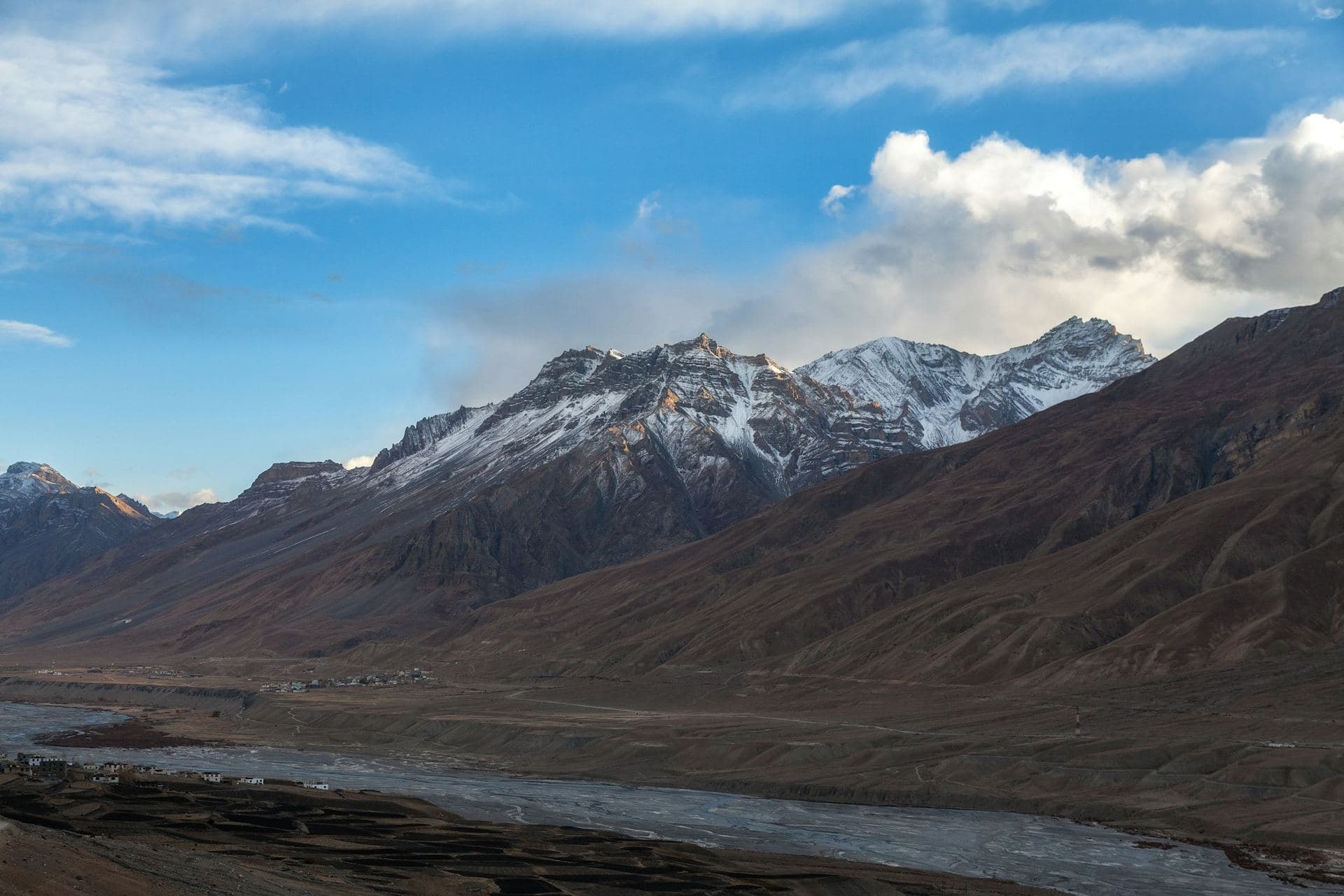
Of all the day trips guests ask us to plan from the orchard, the run to Sissu is the one that surprises them most. You leave Manali in green pine and apple country, drive into a tunnel for about ten minutes, and come out the other side into a bare, cold, high-desert valley where the mountains are grey and brown and the light is different. It does not feel like the same day, let alone the same drive. That contrast is the whole point of the trip, and it is why we keep sending people to do it even though half of them come to us wanting only to sit in the orchard and eat.
This is our practical, slightly opinionated guide to doing Manali to Sissu and a taste of Lahaul as a day trip through the Atal Tunnel. We will be honest about the things that go wrong, because they do go wrong, and a bit of planning is the difference between a lovely day and a long, cold, altitude-headache of an afternoon stuck in traffic near the tunnel mouth.
What the Atal Tunnel actually is, and why it changed this trip
The Atal Tunnel runs under the Rohtang massif and connects the Manali (Kullu) side to the Lahaul valley near the north portal above Sissu. It is 9.02 km long, one of the longest highway tunnels in the world at this altitude, with the south portal sitting at roughly 3,060 m and the north portal around 3,070 m. Before it opened in October 2020, reaching Lahaul meant driving over the Rohtang Pass at about 3,980 m, a slow, winding, permit-controlled climb that was shut by snow for around half the year. The tunnel turned a full-day expedition into something you can genuinely do between breakfast and dinner.
A few things worth knowing before you go. The tunnel is open to traffic through the day but is not a 24-hour road for tourists; timings shift with the season and with maintenance, and vehicles are stopped and released in a managed way rather than a constant free flow. Assume daytime access, roughly morning until early evening, and never plan to be crossing back late at night. There is a speed limit inside (40 km/h minimum, 80 km/h maximum) and stopping, photography and overtaking inside the tunnel are not allowed. People do try to stop for photos at the portals and it causes the jams everyone complains about.
Drive times and distances, realistically
From our Shanag home near Bahang, which is already on the north side of Manali town toward Solang, you are meaningfully closer to the tunnel than from town or from our 14 Mile place at Badgran. Rough numbers we give guests:
- Shanag to the Atal Tunnel south portal: about 15-18 km, 40-55 minutes depending on Solang-area traffic.
- Manali town (Mall Road) to the south portal: about 25 km, 1 to 1.5 hours, and much longer on peak-season mornings.
- 14 Mile Badgran to the south portal: add roughly 30-40 minutes over the Manali-town figure, since you are ~14 km south of town to begin with.
- Tunnel itself: 9.02 km, about 10-12 minutes at the enforced speeds.
- North portal down to Sissu: about 10 km, 20-25 minutes on a good day.
- Sissu to Koksar: a further ~18-20 km, 30-40 minutes.
So on paper Shanag to Sissu is a bit over an hour. In July and long weekends, the stretch between Solang and the south portal can add an hour or more on its own, because everyone in Manali is doing the same drive. We push guests hard on leaving early for exactly this reason.
The route: Sissu, Koksar, and the Lahaul that opens up beyond
Sissu is the first proper stop once you drop down from the north portal, sitting at roughly 3,120 m in the Chandra valley. It has become the headline of this trip for two reasons: the waterfall and the lake.
The Sissu waterfall (locals call it Palden Lhamo) drops off the cliff on the far side of the Chandra river and is visible from the road; you do not have to trek to see it, which is why it works for families and older travellers. It is fullest and loudest in late spring and early summer when the snowmelt is heavy, roughly May to July. By late autumn it thins to a ribbon.
Sissu Lake is a small, calm, man-made-feel body of water near the village that the tourism department has developed with a promenade, some food stalls and, in season, activities like zorbing and short shikara-style boat rides. It is pleasant and photogenic with the peaks behind it, but be clear-eyed: it is a developed tourist spot, not wilderness. On a busy day it is crowded and a little chaotic. Early morning, before the tunnel traffic arrives, it is genuinely beautiful and quiet.
From Sissu, most of our guests carry on to Koksar, the next settlement up the valley at about 3,140 m, sitting where the road toward Baralacha and Leh peels away. Koksar has a cluster of dhabas that have fed truckers and travellers on the Manali-Leh route for decades. This is where you eat: hot Maggi, rajma-chawal, dal, thick sweet chai. There is a small bridge over the Chandra and a checkpoint. Koksar is a good, honest turnaround point for a day trip. Beyond it the road climbs toward Baralacha La and Jispa and that is no longer a day-trip; that is the start of a Ladakh journey and needs a completely different plan.
What makes the Lahaul side feel so different
The Pir Panjal range that the tunnel cuts through is also a climate wall. The Kullu-Manali side catches the monsoon; Lahaul, in the rain shadow, is dry, high and cold-desert in character. So in July and August, while it may be grey and drizzly on our side of the tunnel, Sissu is often bright, dry and clear. That single fact is the best reason to keep this trip in your back pocket during monsoon: when Manali is wet, Lahaul is frequently your sunny day out. The vegetation changes too, from dense conifer to sparse willow and barley terraces and bare scree. Lahaul is culturally Buddhist in large part, so you will see gompas, prayer flags and chortens where the Kullu side is Hindu temple country.
“We tell guests the honest version: the drive through the tunnel is the show. Sissu Lake is nice, but it is the ten minutes of coming out the far side into a bare grey valley, and the hot dal at a Koksar dhaba with snow peaks behind it, that people actually remember.”
Weather, altitude and the cautions we actually give people
This is the section that matters, and it is the one most blog posts skip. You are going from around 2,000 m at Manali to over 3,000 m across the tunnel, and the weather does not care that it took you an hour.
Temperature: even in peak summer, Sissu and Koksar are markedly colder than Manali. A June afternoon that is a comfortable 22-25 C in Manali can be 12-16 C in Lahaul, and windier. In the shoulder months of April and October you can easily be near or below freezing in the morning at the portals. In winter it is deep sub-zero and snowbound. People arrive in shorts and a t-shirt because it was warm when they left the orchard, and they are miserable within the hour. Carry a proper layer no matter the season.
Altitude: 3,000-plus metres is high enough that some people feel it, mild headaches, breathlessness on the lake promenade steps, a bit of nausea. It is usually benign because you are not staying overnight, but do not do the trip hungover or badly hydrated, and go gently with children and elderly travellers. Drink water through the day. If someone feels genuinely unwell, the fix is simple: come back down through the tunnel, and the symptoms ease fast at Manali altitude.
Season by season, roughly:
- Winter (December-March): the tunnel stays open and is the whole reason Lahaul is now reachable in winter at all, but expect snow, ice, occasional closures for avalanche clearing, and cold that bites. A four-wheel-drive and a driver who knows the road matter. The orchard road at our places ices over by mid-December, so even getting to the highway needs care.
- Spring (April-May): the valley wakes up, waterfalls swell, snow lingers on the high slopes. Beautiful, still cold, occasional closures.
- Summer (June-mid September): the popular window and the crowded one. Lahaul is dry and clear even when Manali is under monsoon cloud. Leave early to beat the tunnel jams.
- Autumn (late September-November): our favourite. Clear skies, golden willows in Lahaul, thinning crowds, sharp cold mornings. Genuinely the best light of the year.
One more honest caution: the road between Solang and the south portal is the choke point, and on a bad monsoon day landslips or slush can slow or briefly shut it. Check conditions the morning you go. We keep an eye on it for guests and will tell you plainly if it is a day to skip.
What to carry, and how to actually do the day
- Warm layers: a fleece or light down jacket even in July, plus a windproof top. It is colder and windier than you expect.
- Sunglasses and sunscreen: the high-altitude sun is fierce, and brutal off any snow.
- Water and snacks: 1.5-2 litres per person. Hydration blunts altitude niggles.
- Cash: dhabas and stalls at Sissu and Koksar are cash-first; do not rely on UPI or cards up there, and mobile signal is patchy.
- Valid ID: keep photo ID handy for the checkpoints.
- Medicines: your regular ones, plus basic painkillers for a mild altitude headache and something for a queasy stomach.
- A full tank or charge: fuel is scarce beyond Manali; fill up before you cross. EV charging on the Lahaul side is not something to count on.
- Motion-sickness tablets if you are prone; the descent from the north portal is winding.
On getting there: you can self-drive if you are confident on mountain roads and your vehicle is up to it, but in winter or if you are unsure we strongly suggest a local driver. A day-hire taxi from Manali to Sissu, Koksar and back typically runs in the region of Rs 3,500-6,000 depending on season, vehicle and how hard you bargain; confirm before you set off whether waiting time and the tunnel are included. Shared cabs and buses exist but tie you to their timings, which defeats the point of leaving early. We can help arrange a driver we trust for guests staying with us; just ask us on WhatsApp when you book, and tell us which of our homes you are at so we plan the pickup time properly.
The rhythm we recommend: breakfast early, on the road by 7-7.30 am, through the tunnel before the crowd builds, Sissu Lake while it is still quiet, then up to Koksar for a late, hot lunch. Turn around by early afternoon so you are back through the tunnel and down to Manali well before dark. Do not linger and try to cross back at dusk; that is how people end up stuck in a cold queue at the portal.
And a small plea from us as an orchard kitchen: eat the dhaba food up there. It is simple, it is hot, and rajma-chawal at 3,140 m with the Chandra river roaring below hits differently. Save your appetite for our table when you get back, but do not skip Koksar. It is half the trip.
If you would rather not lose a whole day to the drive, that is completely fair, and Lahaul will still be there next visit. But if there is one big day trip to do from Manali, this is the one we push hardest. You come back to the orchard cold, a little wind-burnt, full of dal, having stood in a valley that looks nothing like the one you woke up in. That is a good day.

Written by the family that runs Persimmon Farmstead — the two boutique hotels near Manali. We write about the valley the way we'd tell a friend at the kitchen table.
Good to know
Can you do Manali to Sissu and back in a single day?
Yes, comfortably. Sissu is roughly an hour and a bit from the north side of Manali via the Atal Tunnel, and Koksar a little beyond that. Leave by 7-7.30 am, do Sissu and Koksar, and be back through the tunnel before dark. The trip only fails as a day trip if you try to push past Koksar toward Baralacha or Jispa, which is genuinely Ladakh-bound territory and needs an overnight plan.
Do I need a permit to cross the Atal Tunnel to Lahaul?
No. Unlike the old Rohtang Pass route, which needed a permit and had a daily vehicle cap, the Atal Tunnel to Sissu and Lahaul does not require a tourist permit. Just carry photo ID for the checkpoints. The tunnel operates on managed daytime access rather than a permit system, so plan around its timings rather than paperwork.
Is Sissu a good idea during the monsoon?
Often it is the best idea. Lahaul sits in the rain shadow of the Pir Panjal, so on a wet, grey July or August day in Manali, Sissu is frequently dry and sunny. The catch is the road between Solang and the south portal, which can slow or briefly close after heavy rain. Check conditions the morning you go, or ask us and we will tell you honestly whether it is a day to attempt.
How cold does it get at Sissu compared to Manali?
Noticeably colder, at any time of year. A pleasant 22-25 C summer afternoon in Manali can be 12-16 C and windy at Sissu or Koksar, and spring and autumn mornings near the tunnel portals can be at or below freezing. Carry a warm layer even if you leave the orchard in a t-shirt; people underestimate this every single time.
Tell us your dates. We'll confirm, personally.
You send a request, a real host confirms it by WhatsApp — usually within a few hours.