
The Lamadugh Trek: A Meadow Above Old Manali
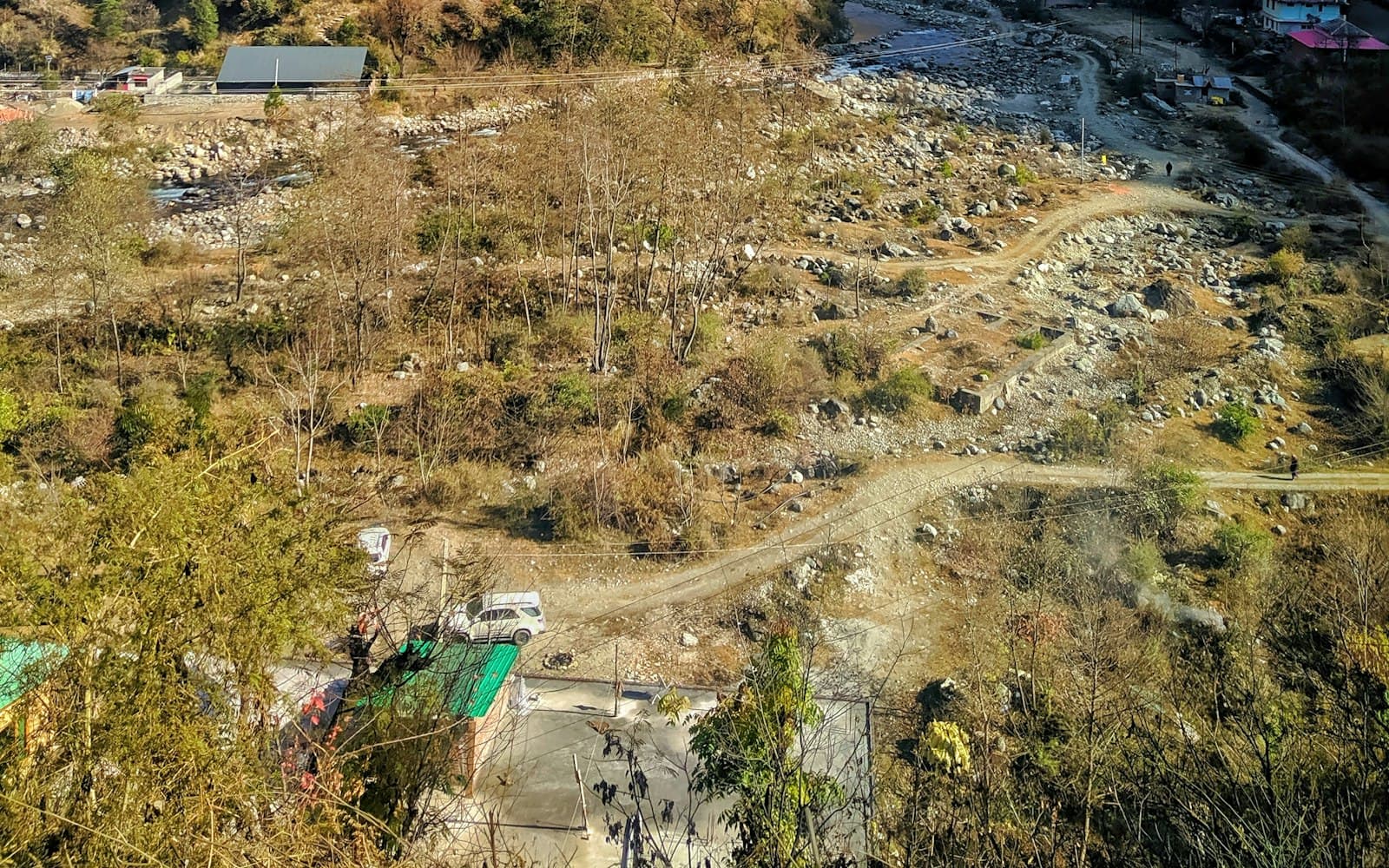
Lamadugh is a high meadow at roughly 3,350 m above Old Manali, reached by a 6–7 km forest trail that gains about 900 m from the trailhead near Manu Temple. Most reasonably fit walkers do it as a long day hike in 4–5 hours up, or camp one night. Best months are May, June, and September to mid-October.
We get asked for one trek more than any other, and it is almost never the famous one. People arrive with Hampta Pass and Bhrigu Lake on a list, then over a plate of siddu they hear about the meadow that sits directly above the town they flew or drove all this way to reach, and something in them settles. Lamadugh is that meadow. It is close, it is honest, and it does not need a five-day permit-and-porter expedition to enjoy.
From our flagship home at Badgran, 14 km south of Manali on the highway, the trailhead is about a 40-minute drive up to Old Manali; from Persimmon Farmstead Shanag, which sits north of town toward Old Manali and Solang, you are closer to 15–20 minutes from the start. Either way, we usually pack you a breakfast, because the walking begins before most kitchens in town open.
Where Lamadugh actually is
Lamadugh is a grazing meadow on the ridge that separates the Manali valley from the Solang side, part of the same forested spur that carries the longer Lamadugh–Rani Sui–Sara Umga route deeper toward the passes. For a day walker, none of that matters. What matters is that the trail leaves from just above Old Manali, near the old Manu Temple, and climbs steadily through pine and deodar until the trees thin and open onto grass. On a clear morning the ridge opposite shows the snow line of the Dhauladhar, and you can trace the Beas valley running away below you.
A thing we always say clearly, because it is easy to get wrong online: the meadow is a walk from Old Manali, not somewhere you can drive. And Old Manali itself is a drive from us — neither of our homes is in Old Manali, though Shanag is only a few kilometres up the road from it. We would rather you knew the real geography before you booked than felt misled after.
The route, step by step
The standard line starts at the Manu Temple end of Old Manali, or a little above it where a forest path breaks off from the last of the guesthouses and cafes. For the first hour you are climbing through thick deodar, switchbacking on a clear mud-and-root trail. It is steep early — that is the tax Lamadugh charges, and it charges it up front. Take it slow; there is no prize for the first hour.
After the first push the forest opens into clearings, and you cross a couple of small streams where you can splash your face and top up water if you carry a filter. Roughly two-thirds of the way up, the gradient eases and the deodar gives way to a more open, mixed slope. You will usually meet a Gaddi shepherd or two here in season, and often their dogs, who are working animals — friendly, but let them be.
The trees release you onto the meadow itself fairly suddenly. One moment you are in forest, the next you are on open grass with the valley falling away and the ridges stacked to the horizon. There is a small forest rest hut and space to sit. In good weather people spread out lunch here and simply stay a while. That arrival is the whole point of the walk.
- Trailhead: above Old Manali near Manu Temple, roughly 2,050 m
- Distance: about 6–7 km one way to the meadow
- Altitude gain: around 900 m to Lamadugh at ~3,350 m
- Time up: 4–5 hours at a walking pace with breaks; 2.5–3 hours down
- Terrain: steep forested switchbacks early, easing to open slope and grass higher up
Day hike or overnight?
Both work, and the choice is really about what kind of day you want. As a day hike, you leave the trailhead by 7–8 am, reach the meadow around noon, eat, rest, and are back in Old Manali by mid-afternoon with your legs tired and your head clear. That is how most of our guests do it, and it fits neatly into a Manali trip without eating a whole day of travel.
The overnight is a different animal. You carry a tent, or arrange one through a local operator, and sleep on the meadow. The reward is the light — the last of it going gold on the ridges, and the first of it the next morning before anyone else is awake. Nights are cold even in summer up there; expect single digits Celsius by June and near freezing at the shoulders of the season. If you camp, you carry out everything you carry in. The meadow is grazing land and forest; it is not a campsite with bins.
“We tell first-timers: do it as a day hike the first time. See whether the altitude and the climb agree with you before you commit to a cold night on a ridge. The meadow will still be there for a second visit, and it is a better second visit when you already know your own legs.”— A note from the hosts
How fit do you need to be?
Honestly? Fitter than a stroll, less than a serious trek. If you can climb stairs for an hour without stopping every flight, you can do Lamadugh — slowly. The distance is modest but the early gradient is real, and you are gaining altitude, so lungs matter as much as legs. People who live at sea level in Delhi or the plains feel the thin air by the meadow; that is normal, and the cure is pace, not pushing.
We tell guests to give Manali a day before they attempt it. Arrive, sleep a night at valley altitude, eat well, walk around Old Manali, and go up the next morning rather than the same day you have driven in from the plains. Children who are used to walking manage it; we have had families do it with kids of nine or ten, turning back early if the little ones flagged, which is always fine. There is no summit to conquer here — the meadow is the destination, and you can turn around at any clearing and still have had a good walk.
Best season, month by month
The trail runs snow-free and pleasant from about mid-April to early November, but the character changes a lot across those months. Here is how we think about it when a guest asks which week to come.
- May–June: green flush, wildflowers coming up on the meadow, long daylight, warm days and cold nights — the classic window, and the busiest
- July–August: monsoon; the forest is lush but the trail is slippery, leeches appear lower down, and cloud often swallows the view — walkable on a clear morning but a gamble
- September–mid-October: our quiet favourite — post-monsoon clarity, firm trail, cool air, the first apple-harvest colour in the valley below and the sharpest ridge views of the year
- Late October–early November: crisp and cold, thinning crowds, chance of an early snow dusting up high; go early in the day and carry warm layers
- Mid-November–March: snow on the upper trail, short days, and cold that turns a day hike into a proper winter undertaking — best left to experienced winter walkers with local guidance
If you want the postcard — flowers and green — come late May or June. If you want the clean, cool, empty version with the best light, come in the fortnight after the monsoon lifts in September. That is when we most often walk up ourselves.
Guide, or on your own?
The main trail is well-trodden and, in clear weather, hard to lose in daylight. Confident hikers who have walked in mountains before do it unguided all the time. That said, the forest section has side paths that shepherds use, and in cloud or fading light it is genuinely easy to take the wrong one down. If it is your first Himalayan walk, if you are camping, or if the weather looks unsettled, take a local guide — a day guide from Old Manali is inexpensive relative to the peace of mind, and they read the sky far better than any app.
Our travel desk can arrange a guide, a packed lunch, and a taxi to the trailhead in one message. We do not run the trek ourselves — we are a farm kitchen and two small homes, not an adventure company — but the people we point you to are ones we know and would send our own guests to without a second thought.
What to carry
- Proper shoes with grip — trail shoes or light boots, not fashion sneakers; the early forest is rooty and the monsoon trail is slick
- At least 1.5–2 litres of water each, plus a way to refill from the streams if you camp
- A warm layer and a light rain shell even in summer — the meadow is cold and the weather turns fast
- Sun hat, sunscreen and sunglasses; the open meadow gives you no shade at midday
- The lunch we pack you, some quick sugar for the climb, and a bag to carry every scrap of it back out
Leave heavy things behind. Every kilo tells on the first steep hour. And do not count on phone signal above the tree line — tell us your plan before you go, and message us when you are back down. We do worry, in the nicest way.
A good day, from our door
The version we love: breakfast and a flask of chai with you before dawn, a short drive to Old Manali, and up you go while the town is still asleep. You reach the meadow by noon, eat on the grass, doze in the sun, and come down with that specific tiredness a real climb gives you. Then you are back at the table by evening, and our kitchen sends out siddu and something slow-cooked, and you sleep the way only a day outdoors makes you sleep. That, more than any peak, is why we keep sending people up to Lamadugh.

Written by the family that runs Persimmon Farmstead — the two boutique hotels near Manali. We write about the valley the way we'd tell a friend at the kitchen table.
Good to know
How long does the Lamadugh trek take?
As a day hike, budget 4–5 hours to climb from the Old Manali trailhead to the meadow at roughly 3,350 m, and 2.5–3 hours to come back down, plus time on top to eat and rest. A comfortable full day is 7 to 8 hours door to door including the short drive from Manali. Many walkers instead camp one night on the meadow.
How difficult is the Lamadugh trek, and do I need to be very fit?
It is a moderate trek — harder than a stroll, easier than a multi-day Himalayan route. The first hour through the forest is steep, and you gain about 900 m of altitude, so lungs matter. If you can climb stairs for an hour without stopping, you can do it slowly. Give yourself a day in Manali to acclimatise before attempting it.
What is the best time of year for the Lamadugh trek?
Mid-April to early November is the snow-free window. Late May and June bring green meadows and wildflowers; the fortnight after the monsoon lifts in September offers the clearest ridge views and firmest trail. Avoid peak monsoon in July–August for slippery ground and cloud, and treat winter as a serious cold-weather undertaking.
Can you camp at Lamadugh meadow?
Yes. Many trekkers pitch a tent on the open grass and spend one night for the sunset and sunrise light. It is grazing land and forest, not a serviced campsite, so you carry in your own tent, water filter and warm bedding, and carry out every piece of rubbish. Nights are cold year-round, near freezing at the shoulders of the season.
How far is the Lamadugh trailhead from Persimmon Farmstead?
The trail starts above Old Manali near Manu Temple. From our flagship home at Badgran, 14 km south of Manali, it is about a 40-minute drive to the start. From Persimmon Farmstead Shanag, north of town toward Old Manali, it is closer to 15–20 minutes. Our travel desk can arrange a taxi, a guide and a packed breakfast.
Tell us your dates. We'll confirm, personally.
You send a request, a real host confirms it by WhatsApp — usually within a few hours.