
Jana Falls & the Old Village
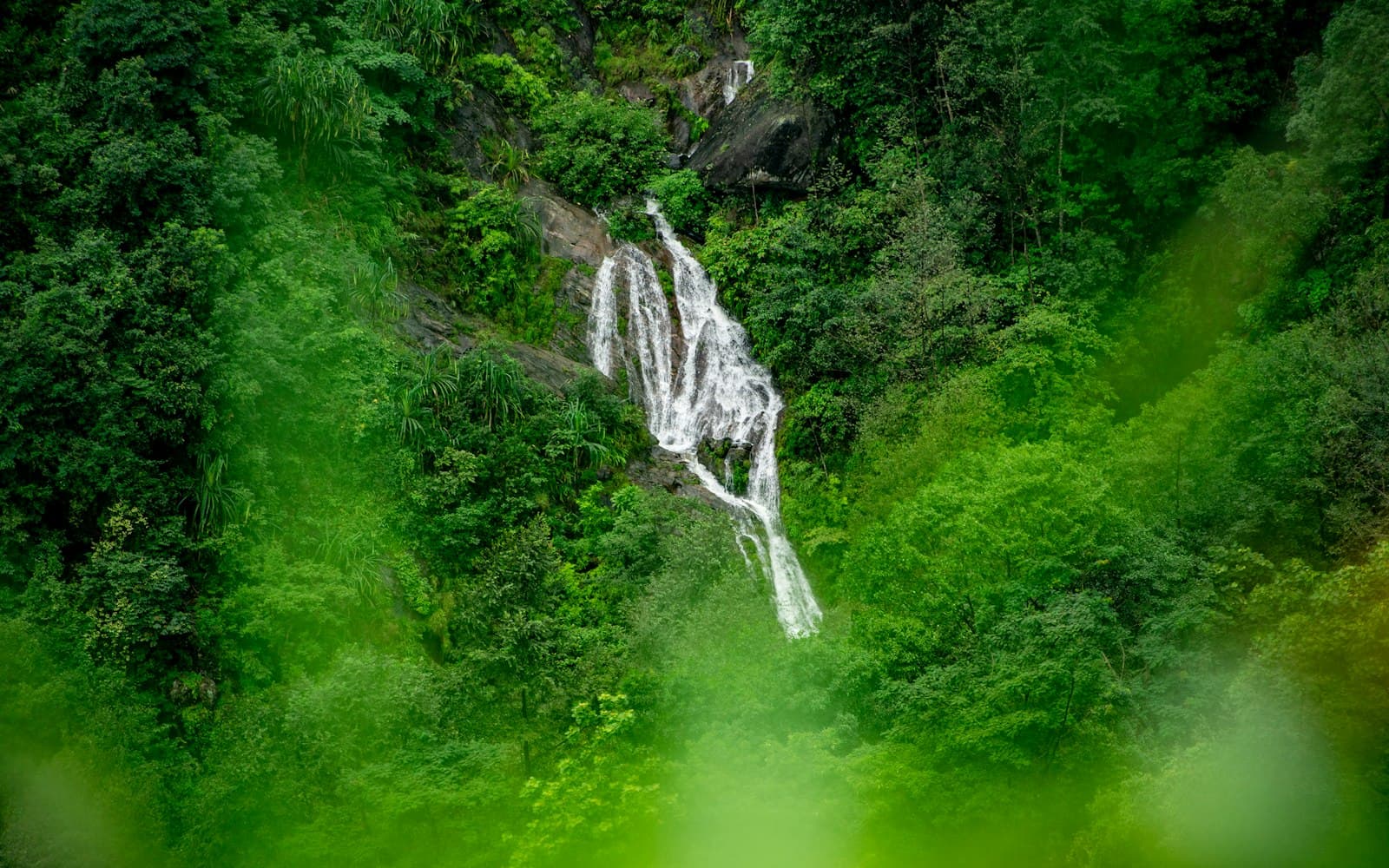
Jana Falls is a roughly 12-metre waterfall above Jana village, about 12 km up a hill road from Naggar in the Kullu valley. Most people come for the cluster of wooden dhabas at the base that serve local trout and siddu on the traditional bethak floor. Plan a relaxed half-day and pair it with Naggar Castle on the way.
We'll be honest before you read another word: Jana is not a big, thundering waterfall. If you've seen the drone reels, temper them. What makes the trip is the whole shape of the day, the climb through apple orchards, the dhabas built entirely of deodar wood, and the smell of woodsmoke and mustard oil when you sit down to eat. Guests who go up expecting a monsoon-swollen cascade come back a little flat. Guests who go up for a slow lunch and a short forest walk come back planning the next one.
Where Jana actually is
Jana village sits at around 2,200 metres on a spur above Naggar, on the left bank of the Beas as you look up-valley. From our flagship at Badgran, on the 14 Mile stretch of the Kullu–Manali highway, Naggar is the natural jumping-off point, it's about 8 km and 20 minutes across the river from us. From Naggar bazaar, the road to Jana climbs roughly 12 km, and that last stretch takes a real 40–45 minutes because it's narrow, single-lane in places, and full of switchbacks through orchards. From our Shanag home, north of Manali, you're looking at closer to a 90-minute drive down to Naggar first, so Jana is more of a flagship-guest day trip than a Shanag one.
Do not trust your maps app on the drive time here. It'll tell you 25 minutes for the last leg and you'll spend 45, because it can't feel the gradient or the tractor coming the other way. Add a buffer.
The drive up from Naggar
This is the part we love most. You cross the Beas at Patlikuhl or below Naggar, climb up to Naggar Castle, and then the road keeps going up past the village into proper orchard country. In September and October the apple trees on both sides are heavy and half the traffic is trucks taking crates down to the Patlikuhl mandi. Higher up the orchards give way to deodar and the air cools noticeably, you'll feel the drop of four or five degrees from the valley floor.
A small taxi from Naggar to Jana and back, with a couple of hours' waiting, tends to run somewhere around ₹1,200–1,800 depending on the season and your bargaining. If you're self-driving, a hatchback is fine, but go slow, and if there's fresh snow in December to February the last few kilometres can be dicey without the right tyres. Our travel desk can arrange a driver who actually knows the road, which on these single-lane stretches is worth more than it sounds.
The wooden dhabas — the real reason to go
At the base of the falls there's a cluster of dhabas, and they are the genuine draw. They're built from local deodar, low-roofed, with a wood fire going and floor seating on the bethak, thin mattresses laid on a raised wooden platform where you sit cross-legged and eat. On a cold afternoon, with the fire crackling and a plate of hot food in front of you, it's one of the nicer ways to spend an hour in the Kullu valley.
What to order:
- Trout — rainbow trout farmed in the cold streams around here, usually served tawa-fried with a little masala. Expect roughly ₹500–700 for a portion depending on size and the day's catch. It's the signature dish and worth it.
- Siddu — the steamed Himachali bread we're a little obsessed with, stuffed with walnut or poppy-seed paste, served with ghee or a dollop of local white butter. A plate is small money, ₹60–120, and it's the thing we'd tell you to order even if you skip everything else.
- Rajma-chawal — the Kullu valley grows its own dark red rajma and it cooks up richer than the plains kind. A hot plate on a cold day is hard to beat.
- Local tea — endless, sweet, and the correct thing to hold while you look at the falls.
A word of caution, and we'd rather you hear it from us: prices at the dhabas can jump in peak season and on weekends, and a couple of them have leaned into the tourist rush a bit too hard. Ask the rate before you order, especially for the trout. Most of the families running these places are lovely and fair; a plate confirmed up front just keeps everyone honest.
“We tell guests the same thing every time — go up hungry, order the siddu first, and don't be shy about asking the price of the trout before it hits the pan. The food is the reason to make the drive. The waterfall is the excuse.”— A note from the hosts
The waterfall walk
From where the road ends and the dhabas sit, it's a short, easy walk up to the base of the falls, five to ten minutes on a rough path, nothing that needs boots or fitness. The water drops maybe 12 metres over rock into a shallow pool. In the monsoon and just after, roughly July into early September, it's full and loud and worth the reels. By late autumn and through winter it thins right down to a modest trickle.
The path can be slippery where the spray keeps the rock wet, so ordinary trainers with some grip beat flip-flops. Families with small kids manage it fine, we just keep a hand on the little ones near the pool because the rocks are greasy. It is not a swimming spot; the water is snowmelt-cold and the pool is shallow and rocky.
When to go
Each season gives you a different Jana, so it's worth matching your visit to what you're after.
Monsoon (July–September)
The falls are at their fullest. The catch is the drive, this is landslide season in the Kullu valley and the hill road up can get muddy or briefly blocked. Check locally on the morning you go. The orchards are green and dripping and the whole hillside smells of wet earth and apples ripening.
Autumn (late September–October)
Our pick. Apple harvest is on, the light is clear and gold, the drive is stable, and the dhabas are still doing brisk trade before winter thins the crowds. The falls have eased off from the monsoon peak but still run well. If you go up once, make it now.
Winter (December–February)
Cold, quiet, and beautiful, but check road and snow conditions first. Above Naggar the orchard road ices over in patches, and after a fresh fall the last kilometres to Jana may not be cleared for a day or two. Some dhabas run reduced hours in deep winter. When it's open, a plate of hot siddu by the fire with snow on the deodars outside is genuinely special.
Pairing it with Naggar Castle
Jana works best as the top half of a Naggar day, and we almost never send guests up for the falls alone. The sensible loop from our Badgran flagship: leave mid-morning, spend an hour or so at Naggar Castle, the 15th-century stone-and-wood fort built by Raja Sidh Singh, now a heritage hotel with a small temple and long views down the valley. Then push up to Jana for a late, unhurried lunch. Come back down through Naggar in the afternoon.
If you have the appetite for it, Naggar has more to give on the way down. The Nicholas Roerich Art Gallery, the old Russian painter's estate with his mountain canvases, sits just below the castle and is a quiet, worthwhile half-hour. There's a small entry fee, usually around ₹50 for Indian visitors. Between the castle, the gallery, and the falls with lunch, you've got a full, satisfying day that never once feels rushed.
Practical notes before you go
- Cash: carry it. The dhabas and the little roadside stalls are cash-first, and mobile network up at Jana is patchy at best, so don't count on UPI going through.
- Timing: aim to be back below Naggar before dark. The hill road has no lighting and the switchbacks are no fun at night.
- Fuel and toilets: sort both in Naggar. There's nothing reliable higher up.
- Footwear: trainers with grip, not sandals, for the wet path to the falls.
- Kids and pets: both are welcome at the dhabas — this is easy, low-altitude ground, and our own guests bring their dogs up all the time.
- Layers: it's meaningfully cooler at Jana than in the valley, even in summer. A light jacket saves the afternoon.
When you get back to us at Badgran, the bonfire's usually going by evening and our kitchen will have dinner on. It's a small family kitchen, not a hotel line, so tell us at breakfast if you'll want to eat in that night and we'll plan around it. After a day of trout and siddu up at Jana, most people are happy with something simple and warm, a bowl of our dal, hot rotis, and a seat by the fire while the valley goes dark. That's the shape of a good Jana day, and it's one we're glad to set up for you.

Written by the family that runs Persimmon Farmstead — the two boutique hotels near Manali. We write about the valley the way we'd tell a friend at the kitchen table.
Good to know
How far is Jana Falls from Naggar and from Manali?
Jana Falls is about 12 km uphill from Naggar bazaar, a 40–45 minute drive on a narrow, winding orchard road. From Manali town it's roughly 30 km via Patlikuhl and Naggar, around 75–90 minutes each way. From our Badgran flagship on the 14 Mile stretch, Naggar is about 8 km, so the whole trip is very doable as a half-day.
What food do the Jana dhabas serve?
The wooden dhabas at the base of the falls are known for local rainbow trout, usually tawa-fried, and siddu, the steamed Himachali bread stuffed with walnut or poppy-seed paste and served with ghee. You'll also find Kullu-valley rajma-chawal and endless sweet tea. Ask the price of the trout before ordering, as peak-season rates can climb.
What is the best time to visit Jana Falls?
For the fullest waterfall, go in or just after the monsoon, July to early September, though the hill road can be muddy or briefly blocked then. Our own pick is autumn, late September into October, when the drive is stable, the apple harvest is on, and the light is at its best. Winter is quiet and pretty but needs a road and snow check first.
Can I pair Jana Falls with Naggar Castle in one day?
Yes, and we'd recommend it. Jana works best as the top of a Naggar day. Leave mid-morning, spend an hour at the 15th-century Naggar Castle, add the nearby Nicholas Roerich gallery if you like, then drive up to Jana for a late lunch at the dhabas. You'll be back below Naggar comfortably before dark.
Is the walk to Jana Falls difficult?
No. From the road-end and dhabas it's a short, easy walk of five to ten minutes on a rough path to the base of the falls. No trekking fitness or special gear is needed, though the rock stays wet and slippery near the spray, so wear trainers with grip rather than sandals. Families with young children manage it easily with a little care by the pool.
Tell us your dates. We'll confirm, personally.
You send a request, a real host confirms it by WhatsApp — usually within a few hours.