
Himachali Food and the Dham: A Farm Kitchen Guide to Eating Well in the Kullu Valley
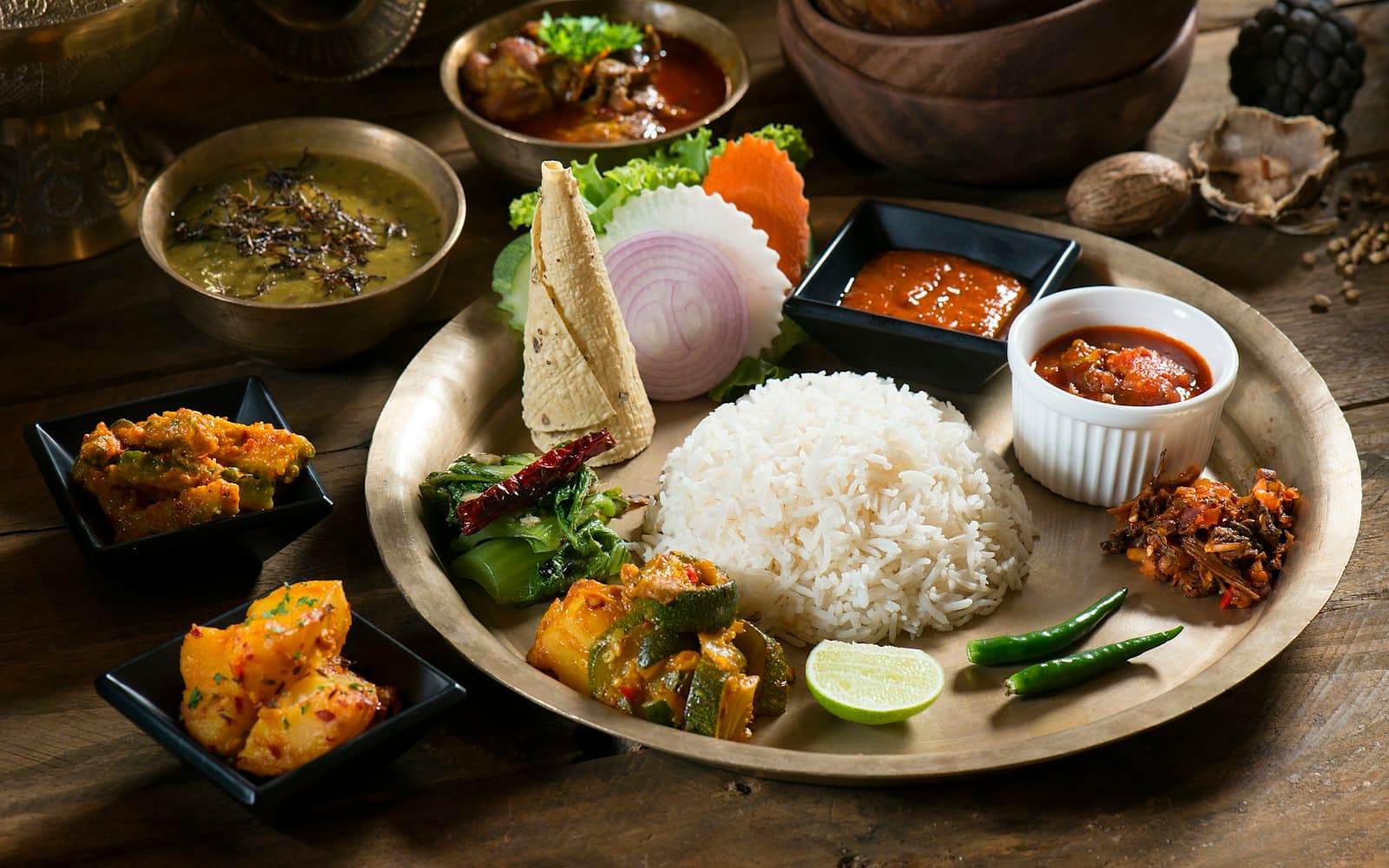
Ask most people what Himachali food is and they will pause. They can name a Rajasthani thali, a Goan fish curry, a Kashmiri wazwan — but the food of these valleys stays quiet, cooked mostly in homes and at weddings rather than in restaurants. That is a shame, because it is some of the most distinctive mountain cooking in India: slow, fermented, curd-heavy, built around what grows above 1,500 metres and what the rivers give. When we started cooking for guests in 2021, we quickly learned that the food was doing more work than the views. People book a room. They come back for the kitchen.
This is our attempt to explain what we actually feed people, what the dishes are, and where you can find the real versions in and around the Kullu valley if you want to go looking. We will be honest about what travels well to a plate and what does not, and we will not pretend every roadside dhaba is a revelation, because it isn't.
The dham: the meal a whole village sits down to
The dham is the heart of Himachali food and the one thing you should try to eat at least once. It is a festive vegetarian thali served at weddings, temple functions and religious gatherings, cooked by a hereditary caste of cooks called botis (also spelt bhoti). These are not caterers in the modern sense — the recipes are held within families and passed down, and a proper dham is prepared overnight in huge brass and iron vessels over wood fire, then served the next day to everyone sitting cross-legged in long rows, food ladled onto leaf plates or steel thalis.
What lands on the plate varies by valley — Kangra, Mandi, Chamba and Kullu each have their own version — but the logic is consistent. It is a sequence, not a jumble. Rice is the base. Over it come, in turn, a few of these:
- Madra — chickpeas or rajma slow-cooked in a yoghurt gravy with ghee and whole spices. Rich, mildly sour, almost creamy. This is the dish people remember.
- Sepu vadi — lentil dumplings (usually urad dal) simmered in a spinach-and-yoghurt gravy. Soft, savoury, deeply comforting.
- Khatta — a deliberately sour dish, often made with chickpeas or pumpkin and soured with tamarind or amchoor, meant to cut through the richness of everything else.
- Kaddu ka khatta — a sweet-and-sour pumpkin preparation that does the same palate-cleansing job.
- Mash dal / maadra of rajma — depending on the region.
- Mittha — a sweet rice, often with raisins and dry fruit, served not at the end but partway through, which surprises first-timers.
- Boor ki kari or a simple curd-based cooling dish to finish.
The defining feature is yoghurt. Where a Punjabi kitchen reaches for tomato and cream, the Himachali kitchen reaches for curd and ghee. That, and the near-total absence of onion and garlic in the classical temple versions, is what gives dham its particular clean, tangy character. It is a meal designed to be cooked in bulk, sit for hours, and still taste right — which tells you everything about how mountain communities historically ate together.
Where to actually eat a dham
Here is the honest part. A true dham happens at an occasion, not on a menu. If you are in the valley during a wedding season (roughly the clear-weather months of April to June, and again October to November) or around a temple festival, and you get invited, go. Kullu's Dussehra in October is the big one — the town fills, and dham-style cooking is everywhere on the fringes of the festival, though the festival itself is chaotic and best treated as a spectacle rather than a food tour.
Outside of an occasion, a handful of places in Kullu and Manali now put a dham thali on the menu, usually needing a few hours' or a day's notice because it genuinely takes that long to cook. Ask locally, or ask us — we keep a running mental list of who is doing it well in a given season, because it changes. When we know a proper botis-cooked dham is happening near either property, we tell guests. It is not something you can reliably order at 8 pm on a Tuesday.
Siddu: the dish we get asked for by name
If the dham is the special-occasion food, siddu is the everyday hero — and it is the single thing guests message us about before they even arrive. Siddu is a steamed, leavened wheat bread, soft and slightly springy, usually stuffed. The dough is fermented with yeast (traditionally, and slowly), rolled around a filling, and steamed rather than baked or fried, which is why it feels so light for something so filling.
The classic winter filling is a paste of ground walnuts and poppy seeds, sometimes with local herbs; savoury versions use ground urad dal or peas. It is eaten hot, dripping with ghee, or with a chutney — a green coriander-mint one, or the fierce local option built around timru (Himalayan prickly-ash, a lemony, tongue-tingling cousin of Sichuan pepper) and hemp seeds, which grow wild across these hillsides. That hemp-seed chutney, bhang ki chutney, is a genuine valley signature and worth trying at least once for the citrusy, nutty punch.
Siddu is winter food in spirit. The fermentation and the ghee make sense when it is cold, and it is at its best from roughly November through March, when the kitchen is warm and the rest of the world outside the window is not. We make it often through winter, and we are happy to do a batch on request in warmer months too — just tell us the day before, because the dough needs its time to rise and there is no rushing it.
“We had a couple last February who ate siddu three evenings running and asked us to write the recipe on the back of their boarding pass. We did. Whether they ever managed the fermentation at sea level, we never found out — but that is the dish that does it to people.”— the hosts
Trout: the river on your plate
The Kullu valley runs along the Beas, and its cold, fast tributaries are ideal for trout. Rainbow trout was introduced to these waters decades ago and there are government and private trout farms up the valley — the Katrain area between Kullu and Manali, and the side valleys like Tirthan and Sainj, are the well-known belts. This is why fresh trout is one of the few genuinely local non-vegetarian treats you can eat here with a clear conscience about provenance.
Good trout barely needs anything done to it. The best preparations we have eaten are the simplest — the fish rubbed with salt, turmeric, a little local red chilli and lemon, then pan-fried or grilled so the skin crisps and the flesh stays just short of firm. Some places do a tawa version with ajwain and garlic. Avoid heavy gravies; they drown a delicate fish. Trout is not inexpensive by local standards, and prices move with the season and the size of the fish, but a whole fresh trout as a main will typically run somewhere in the few-hundred-to-around-a-thousand-rupee range at a decent place depending on weight — worth confirming before you order, since it is often priced by the kilo.
If you want to see where it comes from, the Tirthan valley (a scenic detour of roughly 2 to 2.5 hours' drive south from the Manali stretch, on the way to the Great Himalayan National Park) has become the place people go specifically to eat trout beside the river that produced it. It makes a good full-day trip out of the valley.
The rest of the local table
Beyond the headline dishes, there is a whole quiet vocabulary of mountain cooking worth knowing:
- Babru — a Himachali take on the stuffed kachori, deep-fried, filled with a spiced black-gram paste, eaten with tamarind chutney.
- Aktori — a cake-like pancake made with buckwheat, a speciality of the higher, colder reaches like Lahaul, where buckwheat grows where wheat struggles.
- Chha gosht — for meat-eaters, marinated lamb cooked in a spiced yoghurt-and-gram-flour gravy; the non-veg counterpart to madra's technique.
- Kullu trout apart, the local red rice and the stone-ground wheat make even plain dal-chawal taste different up here — the grain itself carries flavour.
- Rajma from these hills, particularly the small, dark rajma grown in the Bharmour and Chamba belts, cooks softer and tastes earthier than the plains variety.
And then there is what grows on the trees. Kullu is apple country — the harvest runs roughly August into October and the valley smells of it — but the orchards also give plums, apricots, pears, cherries in early summer, and the persimmons that gave our farmstead its name, ripening orange on bare branches into late autumn. Local honey, walnuts and the fruit that never leaves the valley because it is too ripe to travel are, for us, half the point of eating here.
How we cook on the farmstead
We are not a restaurant and we do not pretend to be. There is no printed menu at either Badgran or Shanag. We cook one or two things well each meal, built around what the kitchen garden and the local market gave us that morning, and we cook it the way you would for people staying in your home — because that is what is happening.
In practice that means a rotation of the dishes above alongside straightforward, unfussy Indian home food, heavy on vegetables you can trace to a field within a few kilometres. We do the Himachali specialities — siddu, madra, trout when it is fresh and good — on request or when the season calls for them, and we will happily plan a menu around a guest's arrival if you tell us in advance over WhatsApp. Vegetarians eat very well here by default; the classical Himachali repertoire is largely vegetarian to begin with. We cook for allergies and for children without drama. And yes, the dogs get their own dinner.
The reason we lead with food, and the reason our kitchen ends up in so many of the messages guests send afterwards, is simple. Mountain views you can get from a hundred windows in this valley. A plate of properly cooked madra with ghee-soaked rice, eaten slowly after a cold day outside, is harder to find than you would think — and it is the thing that quietly decides whether people come back.
So come hungry, and tell us a day ahead if there is something specific you have read about and want to try. Half the time, that is how we end up cooking it for ourselves too.

Written by the family that runs Persimmon Farmstead — the two boutique hotels near Manali. We write about the valley the way we'd tell a friend at the kitchen table.
Good to know
What is a dham and can I just order one at a restaurant?
A dham is a festive vegetarian thali — rice with madra, sepu vadi, sour khatta and sweet mittha — traditionally cooked overnight by hereditary cooks called botis and served at weddings and temple functions. A true dham happens at an occasion, not on a menu. A few places in Kullu and Manali now offer a dham thali but usually need a day's notice, because it genuinely takes that long to cook properly. Ask us and we'll point you to whoever is doing it well that season.
What Himachali dishes should a first-time visitor try?
Start with siddu, the steamed stuffed wheat bread eaten with ghee and hemp-seed or timru chutney — it's the everyday favourite. Then madra, the yoghurt-based chickpea curry that anchors the dham. If you eat fish, fresh Kullu-valley trout, simply pan-fried, is the one local non-veg treat worth seeking out. Siddu is at its best in the cold months, roughly November to March.
Where does the trout come from and how much does it cost?
Rainbow trout is farmed in the cold tributaries of the Beas — the Katrain belt between Kullu and Manali, and the Tirthan and Sainj side valleys. It's often priced by the kilo, so a whole fresh trout as a main can range from a few hundred rupees to around a thousand depending on weight; always confirm before ordering. The Tirthan valley, about 2 to 2.5 hours' drive south, is the classic place to eat it beside the river.
Do you cater to vegetarians and dietary restrictions at the farmstead?
Very easily. Classical Himachali cooking is largely vegetarian to begin with, so vegetarians eat well here by default. There's no fixed menu — we cook around the kitchen garden and morning market — and we handle allergies, children's meals and specific requests without fuss. Message us over WhatsApp a day ahead if you want a particular dish like siddu or a dham-style spread, since some need advance preparation.
Tell us your dates. We'll confirm, personally.
You send a request, a real host confirms it by WhatsApp — usually within a few hours.