
Hampta Pass Trek: An Honest Basecamp Guide
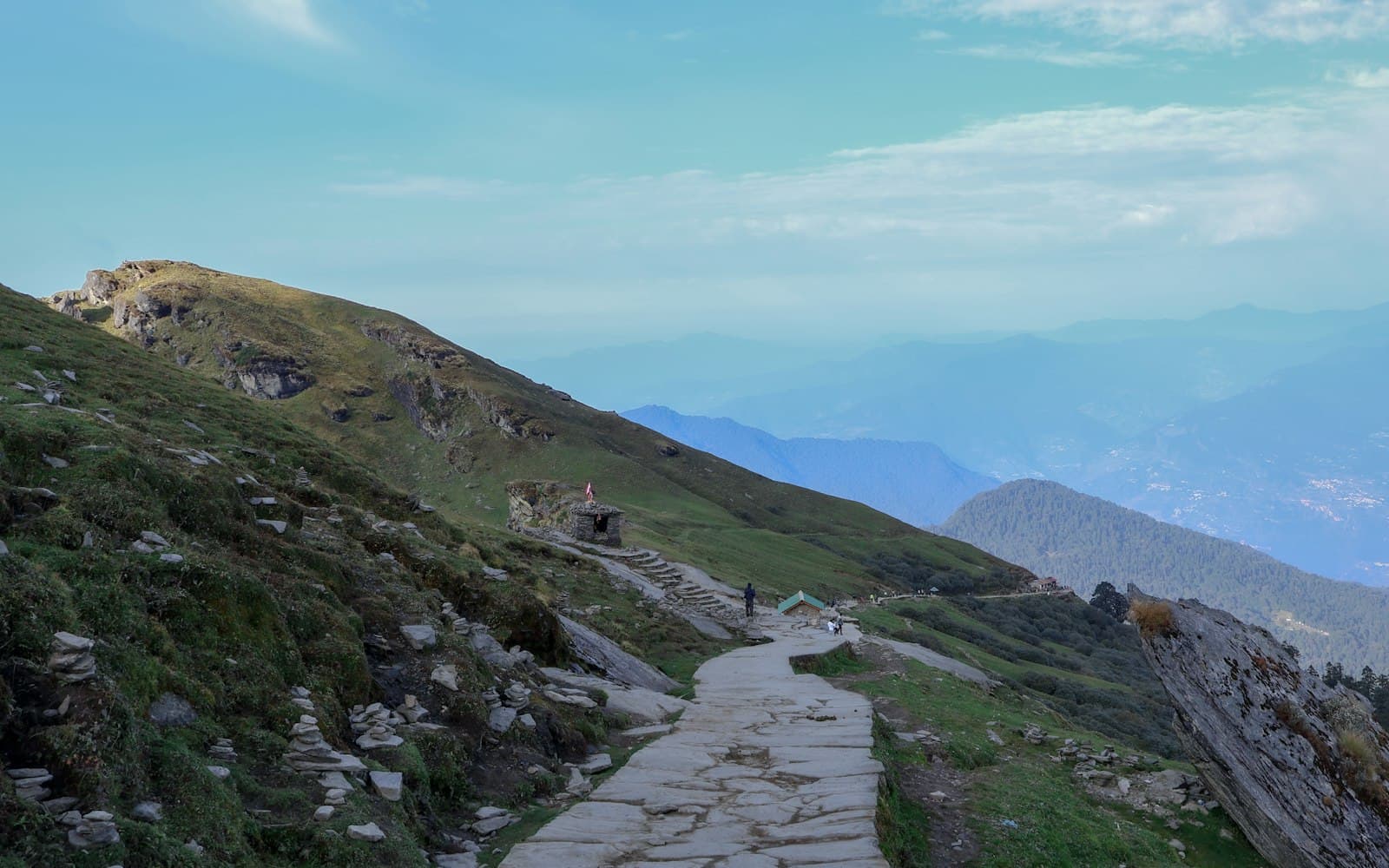
Of all the treks that start near Manali, Hampta Pass is the one that gets under people's skin. It's a crossing, not an out-and-back — you walk out of the lush green Kullu side, over a 14,000-foot pass, and down into the stark, moon-like Lahaul valley on the other side. Two completely different worlds in a few days. Here's the honest guide we give guests who use us as a basecamp before they go.
The best time to trek Hampta
The Hampta Pass window is essentially late June to mid-September. Late June and July give you the famous green valley and river crossings; the monsoon months are lush but wetter underfoot. Late August into September brings clearer skies and the first crispness of autumn. Outside that window the pass is under snow and not a casual undertaking.
How hard is it, really?
Hampta is graded easy-to-moderate, which is fair but can lull people. The daily distances aren't huge, but you're gaining serious altitude, the pass-crossing day is long and steep on both sides, and the river crossings are cold and real. You don't need to be an athlete, but you do need to arrive fit — able to walk uphill for hours without misery — and properly acclimatised.
Acclimatisation is the whole game
This is where a basecamp night earns its keep. Rolling straight off an overnight Volvo and onto the trail is how people get altitude sick. A night or two in the valley first — sleeping well, eating properly, letting your body adjust to the thinner air — dramatically improves both your safety and your enjoyment. It's not indulgence; it's sensible mountain practice.
- Arrive one to two days early and rest at valley altitude before the trek.
- Break in your boots before you come — blisters end more treks than fitness does.
- Layer for two climates: humid-green on the Kullu side, cold-desert on the Lahaul side.
- Go with a registered operator for the crossing unless you're genuinely experienced.
- Hydrate hard and eat well the day before — it matters more than any gear.
Why the night before matters
There's a reason we love hosting trekkers. The night before a big walk, you want three things: a warm bed, a good sleep, and a proper meal that fuels you rather than sits heavy. Our kitchen quietly specialises in exactly that — a big, honest dinner and a real breakfast before an early start. Come back down a few days later ravenous and we'll do it in reverse.
“Trekkers who sleep and eat well the night before come back glowing. The ones who cut corners come back with stories about how hard it was.”— A note from the hosts
Basing yourself with us
Both homes make a comfortable, well-fed base before Hampta — the Shanag house puts you a little closer to the northern trailheads, and our travel desk can connect you with registered operators and sort the early-morning logistics. Tell us your trek dates when you book and we'll build the stay around them.
The Hampta crossing, day by day
The trek proper starts not in Manali but at Jobra, a roadhead at roughly 2,400 m that you reach by a memorable drive of about ten hairpin bends — an hour and a half, maybe two, from the valley floor. Day one is deliberately gentle: a two-to-three-hour walk beside the Rani Nallah to the meadow camp at Chika, around 3,100 m, which lets your lungs meet the altitude slowly rather than all at once. Day two climbs on to Balu Ka Ghera at about 3,600 m — the name means 'the bed of sand' — a five-hour day through open meadow with a river crossing or two, ending at the camp where everyone gathers their energy for the big day ahead.
Day three is the one you came for and the one that earns the grade. You leave Balu Ka Ghera early and climb steadily over snowfields and scree to the top of the pass at around 4,270 m — the roughly 14,000-foot high point of the whole route. Then comes the part nobody warns you enough about: a long, steep descent down snow and loose rock into the Lahaul side, dropping to the camp at Shea Goru near 3,900 m. Expect ten to twelve hours on your feet, cold fingers at the top, and knees that will thank you for every trekking pole you packed.
Day four is comparatively kind — a descent along the Chandra river to Chatru at about 3,360 m, where the trail meets the road again and most groups camp a final night. From here you can add the fifth day that turns a good trek into a great one: the drive up to Chandratal, the crescent 'moon lake' at roughly 4,300 m, before the long road home to Manali through Gramphu and the Atal Tunnel. Skip Chandratal and Chatru back to Manali is a half-day drive — you can be back at our table by evening.
Getting trek-fit before you come
The acclimatising night matters, but it can't undo an unfit body — that work happens at home in the four to six weeks before you arrive. Build a base of cardio four or five times a week: aim to jog five kilometres in comfort, or walk briskly uphill for a full hour without stopping. Add stairs, squats and lunges, because it's the descents — that long drop off the pass to Shea Goru — that wreck untrained knees, not the climbs. In the last fortnight, walk with a loaded daypack of six to eight kilos so your shoulders and back learn the weight before the mountain teaches them. You don't need a gym membership; you need to turn up able to walk uphill for hours and still enjoy it.
Permits, operators and rough costs
For Indian travellers the Hampta trek needs no special permit, though there's a forest entry or 'green' fee of a few hundred rupees a head that a good operator folds into the package, along with the Chandratal ticket if you add it; foreign nationals pay a higher forest fee and should carry a passport and spare photographs. On cost, a well-run fixed-departure trek of four or five days generally runs somewhere in the ₹8,000 to ₹13,000 per-person range, covering camping, all meals on the mountain, a certified guide, mules for the load and safety gear. The vehicle between Manali and the Jobra roadhead, and the pickup at Chatru, is sometimes included and sometimes an extra ₹1,500 to ₹2,500 — always ask before you book. Our travel desk works with registered operators we trust and can line one up around your dates.
Altitude sickness — respect the signs
Altitude is the real risk on Hampta, not the terrain, and it doesn't care how fit you are. Learn the early signs and take them seriously: a headache that won't shift, nausea or a lost appetite, dizziness, unusual breathlessness at rest, and broken, restless sleep. The rules are simple and non-negotiable — don't climb higher while symptoms are building, tell your guide the moment you feel off, drink three to four litres of water a day, and come down if things worsen, because descent is the one reliable cure. Talk to a doctor about Diamox before you travel, and if you'd like, our doctor-on-call can give you a quick check the evening before you set out.
“The mountain will still be there next year. We'd far rather a guest turn back at the pass and come home for dinner than push on feeling terrible — every experienced trekker we know has walked down at least once.”— A note from the hosts
What to pack for the pass
You'll hand a duffel to the mules and carry a light daypack yourself, so pack for two climates and one very cold morning. This is the kit we tell guests not to leave the valley without:
- Trekking shoes with ankle support, well broken in — plus camp sandals for the evenings.
- Three warm layers: thermal base, a fleece or mid-layer, and an insulated jacket for the pass day.
- A waterproof shell and a rain poncho — non-negotiable in the June–July window.
- Quick-dry trek trousers (skip jeans) and several pairs of wool socks.
- Warm hat, sun hat, and UV sunglasses for the snow glare, plus SPF 50 sunscreen and lip balm.
- Waterproof outer gloves with a liner pair underneath.
- A headtorch with spare batteries — camp has no electricity.
- Two one-litre bottles or a hydration bladder, and water-purification tablets.
- Trekking poles — your knees will need them on the Shea Goru descent.
- A personal kit: blister plasters, ORS, painkillers, any regular medicines, and Diamox if your doctor advises it.
- A 20–30 litre daypack with a rain cover; photo ID (passport for foreign nationals) and cash, since there are no ATMs past Manali.
Storing your bags and the walk back down
One quiet piece of trek logistics people forget is the city luggage. Leave the non-trek bag — laptop, spare clothes, the going-out jacket — locked with us while you're on the mountain, and carry only what you need up to Jobra. Plenty of guests split the stay too: a night to settle in and acclimatise before the pre-dawn start, the crossing itself, then a recovery night back with us with hot showers on tap and a same-day laundry turnaround for everything that came home muddy. Because we take bookings by request over WhatsApp rather than online, just send us your operator's departure date and we'll build the rooms, the early taxi to Jobra and the pickup at Chatru around it.

Written by the family that runs Persimmon Farmstead — the two boutique hotels near Manali. We write about the valley the way we'd tell a friend at the kitchen table.
Good to know
What is the best time for the Hampta Pass trek?
Late June to mid-September. Late June and July give the classic green valley and river crossings; late August and September bring clearer skies and early-autumn crispness. Outside that window the pass is snowbound and not a casual trek.
Do I need to acclimatise before Hampta Pass?
Yes. Spending a night or two at valley altitude near Manali before you start — sleeping and eating well — significantly lowers the risk of altitude sickness and makes the trek far more enjoyable. Arriving straight off an overnight bus and hitting the trail is the most common mistake.
How many days does the Hampta Pass trek take?
The trek itself runs four days from the Jobra roadhead, or five if you add the drive up to Chandratal lake at the end. We'd suggest arriving a day or two earlier to rest and acclimatise near Manali, so plan for roughly six to seven days door to door, including your basecamp nights with us.
Do I need a permit for the Hampta Pass trek?
Indian trekkers don't need a special permit for Hampta — just a forest entry fee of a few hundred rupees that organised operators usually include, plus a small separate ticket if you add Chandratal. Foreign nationals pay a higher forest fee and should carry a passport and spare photographs.
How much does a guided Hampta Pass trek cost?
A well-run four-to-five-day fixed departure generally falls in the ₹8,000 to ₹13,000 per-person range, covering camping, meals on the trail, a certified guide, mules and safety gear. Transport to the Jobra roadhead and back from Chatru is sometimes extra, so ask your operator. That's all separate from your stay with us before and after.
Tell us your dates. We'll confirm, personally.
You send a request, a real host confirms it by WhatsApp — usually within a few hours.