
A Year in Our Orchard
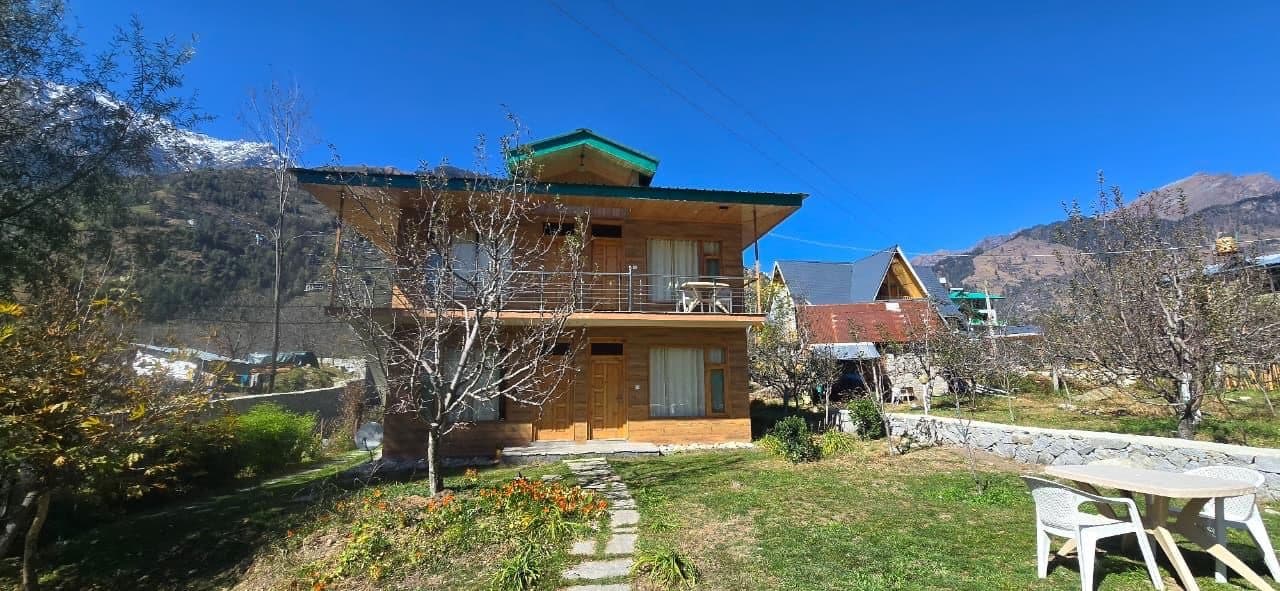
Our orchard at 14 Mile in Badgran runs on a four-season clock: apple blossom opens late March into April, the trees green up and swell through the June–August monsoon, the heavy Royal and Red Delicious harvest lands mid-September to late October, and the first real snow reaches us around late December. We live all of it, one crop at a time.
We planted our first saplings the winter we moved up from the plains, and the orchard has taught us the calendar ever since. This is Badgran, on the Kullu–Manali highway roughly 14 km south of Manali town, a minute off NH-21, opposite Span Resort. Our second home, Persimmon Farmstead Shanag, sits higher up near Bahang, 4–5 km north of town toward Old Manali and Solang, and its orchard runs a couple of weeks behind ours. Same fruit, different altitude, so we get to watch the whole thing twice.
March–April: blossom, and the orchard wakes up
The trees are bare until they aren't. Sometime in the last week of March the buds on the apple and plum break, and within about ten days the whole slope goes pink and white. Blossom at Badgran usually peaks in the first half of April; at Shanag, being higher and colder, it can run a good week or ten days later. Mornings are cold still, 4–8°C, and the afternoons climb to the high teens.
This is the tense fortnight of the year for us. A late hailstorm or a hard frost during full bloom can knock out a chunk of the crop before it ever sets. We watch the sky more than the phone. When the bees are out and working the blossom on a still, warm afternoon, we relax a little — that hum is the sound of a good apple year being written.
For guests, April is quietly one of the best windows: the valley is green-turning, the trees are in flower, the crowds haven't arrived, and the morning sun still pours straight into the Badgran rooms the way it does all year. Bring a jacket for the mornings.
May–June: the green swell
Once blossom drops, the tiny fruit sets — pinhead-sized, hard, green, hiding under the leaves. May and June are the growing months, and also the busy road-trip months, when Delhi and Chandigarh empty into the hills. Daytime at Badgran sits around 22–28°C in this stretch, cool at night, and the orchard is at its most generous shade.
Two jobs dominate the trees now: thinning and propping. We thin the clusters by hand so each apple has room to grow to size rather than getting fifteen runts on one spur. Later, as the fruit fills out, some branches sag so low we prop them with wooden poles to keep them off the ground. It looks like the orchard is on crutches, and in a way it is.
What else grows here in summer
The apple trees get the attention, but they aren't the whole farm. Around and between them, our summer kitchen garden fills up, and a fair bit of what lands on your plate walks a very short distance to get there.
- Plums and apricots — these ripen before the apples, through late June and July, and the first jam of the season is usually apricot
- Beans, peas, pumpkin and squash from the kitchen patch, plus whatever greens the season gives us
- Herbs and coriander we cut to order — the mint in your afternoon chai in July was almost certainly outside the kitchen door that morning
- Walnut trees, which we don't plant so much as inherit; the nuts come good in autumn
“People ask what 'farm-to-table' means when the farmstead is a family orchard and the kitchen is a small family kitchen, not a hotel line. It means when the plums are ready, there are plums on the table, and when they're finished, they're finished. We don't pretend to fine dining. We cook what the season actually handed us that week.”— A note from the hosts
July–August: monsoon, mud, and mushrooms
The monsoon reaches Kullu around the first week of July and stays until early September. This is the honest, less-photographed side of orchard life: cloud sitting on the ridge for days, the highway occasionally slow after a landslip, leeches on the wet grass, and the apples fattening fast in the humidity. Temperatures are mild, 20–26°C by day, and the whole valley is loud green.
We won't sell you monsoon as postcard weather, because it isn't. But it's inexpensive, uncrowded, and deeply peaceful, and the orchard has never smelled better — wet earth, wet bark, woodsmoke from the kitchen. Wild mushrooms come up in the damp; the local guchhi (morel) season is spring, not now, but the rains bring their own crop the villagers know to hunt. Guests who come in the rains tend to be the ones who come back.
Practically: this is when a stay a minute off the highway earns its keep. If a road up toward Solang or Rohtang is having a bad-weather day, you're still an easy run to Manali town and back, and the bonfire moves under cover.
September–October: the harvest, our loudest season
This is what the whole year has been building toward. The apples colour up through September — the reds go deep, the fruit gets heavy — and picking runs from roughly mid-September into the last week of October, Badgran first, Shanag a little after. Autumn is also, not by accident, the most beautiful time to be here: clear skies, the poplars turning gold, days around 18–22°C and cold, starry nights.
Harvest is a family-and-neighbours affair. The pickers work the trees with ladders and canvas bags, the crates stack up in the shade, and the whole place smells of bruised apple and cut grass. Guests who come in these weeks can walk the rows while it's happening, eat fruit still warm from the tree, and generally get roped into carrying a crate or two, which nobody has ever complained about.
Where the apples go, and what we keep back
Most of the crop is graded and boxed and goes down to the Parala and Bhuntar mandis, same as every orchard in the valley — that's the family's living, not a garnish. But we hold plenty back. This is jam-and-chutney season in the kitchen: apple jam, apple chutney with the local spices, stewed apples for breakfast, and the odd batch of apple cider vinegar going quietly sour in a corner. If you've had our apple something-or-other in November, it was picked in October fifty steps from where you ate it.
“Our stated goal when we left our old jobs and moved up was to make the food here a subject people talk about in town. Harvest is when that's easiest to keep. The apple on your breakfast plate has a shorter commute than you do.”— A note from the hosts
November: the orchard exhales
After the last crate goes down, the trees start dropping their leaves and the orchard goes bare and quiet. November is our slow, tidy month — pruning starts, the fallen wood gets stacked for the winter bonfires, and the beds get put to sleep. Days cool sharply, 12–16°C, and the nights dip toward freezing. The tourist rush has thinned, and the light in the afternoons goes long and golden.
It's an underrated time to visit. The bonfire earns its place again every single evening, the kitchen leans into the autumn preserves, and the valley has that end-of-party calm before the snow crowds arrive. Bring warm layers; the mornings have real bite.
December–February: the first snow, and the deep cold
The first proper snow at Badgran usually comes around late December, sometimes early January, and Shanag — higher and closer to the snow line — often whitens a week or two before us and holds it longer. Deep winter runs January into February, with day temperatures hovering around 2–7°C and nights well below zero. This is snow-view-from-the-bed weather, and the reason a lot of guests choose the Badgran rooms, which catch the morning sun the moment it's up.
The orchard sleeps under snow, and that sleep is the point — apple trees need the winter chill to fruit well the next year, so a cold snowy December is us cheering, not complaining. Our winter jobs are all about warmth and grip: 24×7 hot water we don't take for granted at this altitude, the woodstove and bonfire going, and keeping the short orchard path from the highway clear when it ices over, which by mid-December it reliably does.
If you want the whole white postcard — snow-play, the run up toward Solang, the drive to the Atal Tunnel and Sissu — Shanag puts you closer to the action, while Badgran gives you the quieter, sunnier, easier-access winter. Both keep the kitchen and the fire going regardless of what the road is doing.
How to time your visit to the orchard
There's no single best month; there's a best month for the thing you want. Here's how we'd steer you, one crop-clock to another.
- Blossom and quiet: April, the first half especially, Badgran ahead of Shanag
- Green, long days, road-trip weather: May–June
- Peaceful, green, honestly wet and uncrowded: July–August monsoon
- The apple harvest itself, plus the best light of the year: mid-September to late October
- Slow, golden, bonfire-every-night calm: November
- First snow and snow-from-bed: late December into February, Shanag whiter, Badgran sunnier and easier to reach
Whichever window you pick, the orchard will be doing something worth walking out into. We're happy to tell you what's ripe, what's flowering, or what's under snow the week you're thinking of — just ask us on WhatsApp before you book, and we'll give you the honest picture, not the brochure one.

Written by the family that runs Persimmon Farmstead — the two boutique hotels near Manali. We write about the valley the way we'd tell a friend at the kitchen table.
Good to know
When do the apple trees blossom near Manali?
At our Badgran orchard, roughly 14 km south of Manali, apple blossom breaks in the last week of March and peaks in the first half of April. Our Shanag orchard, higher and colder near Bahang, usually flowers a week to ten days later. Early April is the quiet sweet spot: pink-and-white trees, green valley, and no crowds yet.
What month is apple harvest in the Manali valley?
The main apple harvest runs from about mid-September to late October across the Kullu–Manali valley. Our lower Badgran orchard picks first; Shanag, being higher, comes a little after. These weeks also bring the clearest skies and best autumn light of the year, so it's a fine time to walk the rows while picking is actually happening.
When does it first snow at Persimmon Farmstead?
The first proper snow at Badgran usually arrives around late December, sometimes early January. Shanag sits higher and closer to the snow line, so it often whitens a week or two earlier and holds snow longer. Deep winter runs January into February, with sub-zero nights and the snow-from-bed mornings a lot of guests come for.
Is the monsoon a bad time to visit the orchard?
It's wet — cloud on the ridges, occasional slow roads, mild days around 20–26°C from July into early September. But it's green, peaceful and uncrowded, and being a minute off the highway keeps you connected to Manali town even on a bad-weather day. Monsoon guests are often the ones who come back.
Is the food really grown on the farmstead?
A lot of it, in season. Apples, plums, apricots, walnuts and a summer kitchen garden of beans, greens and herbs grow around the trees. When the plums are ready there are plums on the table; when they're finished, they're finished. It's a small family kitchen cooking what the season handed us, not a hotel line — that's the whole point.
Tell us your dates. We'll confirm, personally.
You send a request, a real host confirms it by WhatsApp — usually within a few hours.